Category Archives: Columnist

Weekend Tarot Reading — Sunday, Jan. 11, 2015

By Sarah Taylor

Taking a look back over recent readings, there are correlations between this reading and two others that are asking for attention: first, with the reading last week (Sunday, Jan. 4, 2015), and, second, with the reading of Dec. 14, 2014. If we approach these as significant, this means that there is a larger story the cards are telling you about your life, from week to week — sometimes focussing on one theme; sometimes returning to another; sometimes bringing in something new.

hermit_six_swords_princess_swords_rohrig_sm

The Hermit, Six of Swords, Princess of Swords from the Röhrig Tarot deck, created by Carl-W. Röhrig. Click on the image for a larger version.

Last week, the reading held the following cards, from left to right: Justice, Eight of Disks, Princess of Cups (the Page in Rider-Waite Smith-based decks). This week’s reading, from left to right holds: The Hermit, Six of Swords, Princess of Swords. That’s a major arcana, a minor arcana, and a court card respectively — both courts also being Princesses.

Something feels like it is lining up. Two parallel lines; two parallel, yet interconnected, experiences. Both with their roots in a larger life theme (both major arcana cards being those larger life themes, and in the card associated with the past); both applying those themes in the practicalities of the present (the minor arcana cards in the centre position); and both heralding the emergence of a new way of being (the Princesses in the future positions).

I write “a new way of being” because Princesses are the nascent, personality-based expressions of their suit. They are relatively young and inexperienced, yet they are also bold, fearless, and unadulterated (un-adult-erated). They have not yet learned to self-censor in the way that older people do — and more respect to them for being this way. They are the way-showers, the liberators, the renegades and rebels. Their rebellion can be quiet and personal, or loud and provocative. It can be destructive, constructive, or both. One way or another, though, an aspect of self is birthed and makes its presence known — either in you, or through a reflecting back to you from someone else.

Many of us will be trying out our new wings right now, that’s for sure.

So, in the cards this week, we have a time of introspection in the past, which may or may not have been accompanied by feelings and tangible experiences of solitude. This is The Hermit, which is the card that comes after the extroversion of Strength, and indicates moving within. This is a vital aspect of the soul journey, moving within. Without this time, we cannot integrate what we have discovered on the way.

It is often not an easy time. It is often not easy to contend quite as fully with ourselves as The Hermit asks of us. We fight tending the inner fire. We will do much in order not to look into its flames, let alone nurture it. But something has come of this time. Work has been done. The wood has been chopped, the water has been carried.

And now there is a period that you are currently moving into, which was coming up on the horizon in mid-December last year:

“The words on the Six of Swords:

Differentiation,” “Cognitions,” “ability to analyse.”

Three swords stand, point down, on each side of the card. Balance, yet “differentiation.” Analysis, yet synthesis. This is one of the ‘lightest’ of the Swords cards, and speaks of a transition from the confusion of the Five to a coming together and moving into a new form. It will also frequently speak of a trip across water in the real world. There is a shift to a new state of relating, and relatedness. This is likely to have its origins in you, although it may also play out through the mirror of another, or others, in your life.”

The outcome: freedom. Freedom from a belief that has held you back, freedom from an inability to express yourself, freedom to stand for something that releases you and others, freedom to have your own mind. Again, this is the start of something: the Princess needs time to mature and take her place at the head of court — to integrate and live out her promise fully. But she is there, and she will be heard.

What will come from that assertion is a sense of being unashamedly yourself in how you see and relate to a part of life. Your life.


Astrology/Elemental correspondences: The Hermit (Virgo), Six of Swords (Mercury in Aquarius), Princess of Swords (the earthy aspect of air)

If you want to experiment with tarot cards and don’t have any, we provide a free tarot spread generator using the Celtic Wings spread, which is based on the traditional Celtic Cross spread. This article explains how to use the spread.

My Karma Has Just Run Over My Dogma: Addressing the Sexual Conflicts of Feminist Men

Note: This week’s sex-and-relationships column comes from the Sexuality.org archives. David Steinberg, a former Planet Waves contributor, wrote it in 1998. In light of Mars and Eros conjoining Nessus in Aquarius this weekend, I’m very curious to hear how readers feel the experience of feminist men has evolved in the 16 years since. — Amanda

By David Steinberg.

Ironically enough, one of the clearest expressions I have heard of the sexual dilemma facing men who define themselves as feminist came from an outspokenly feminist woman. She was speaking about her own difficulty in integrating her feminist beliefs with her sexual desires.
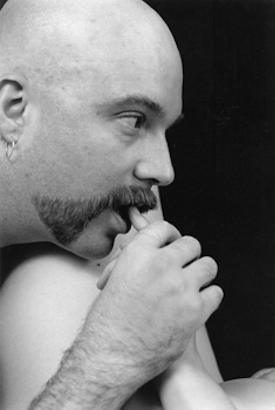
Photo by David Steinberg.

Photo by David Steinberg.

“I don’t know what I’m supposed to do,” she said early in the 1980’s, about having intercourse with her male partner. “If he’s on top, he’s dominating me. If I’m on top, I’m servicing him. My feminism and my sexuality are both essential to me. I’m not willing to choose one over the other. I don’t know what to do.”

Subjecting one’s sexual desire to the rigors of ideological political analysis is both important and a tricky piece of work. It’s important because how we think of sex, and how we think of ourselves as sexual people, has real political meaning, especially with regard to how power is distributed among men and women. But it is also tricky because we have such strongly ingrained tendencies to interpret sex negatively, and because once the watchful eyes of the internalized sex police are mounted on your shoulder, passion and spontaneity have a way of going out the window. And, let’s face it, sex, no matter how correctly micromanaged, is nowhere without passion and spontaneity.

I have a lot of sympathy for the sexual dilemmas of men who pay serious attention to feminist issues. I have strongly identified with the feminist movement since the late 1960’s, not only in terms of that movement’s analysis of the unjust power imbalances between men and women in society, but also for its radical redefinition of male and female gender roles.

At the personal level, I have been inspired by feminism not out of guilt over my previously unenlightened consciousness, but because feminism offered me both the opportunity and the insight to become the kind of man that I had always wanted to be but that traditional American culture regards, essentially, as unmanly. Being rough, tough, stoic, able to leap tall buildings at a single bound, fight the good wars, be the main provider of family income, always know how to protect the poor little woman from the nastiness of the world, and die at an early age — well, it wasn’t really my thing.

So I was delighted when a movement came along that called upon both women and men to see through the gender roles handed them by society, and begin to put things together differently. Rather than seeing the empowerment of women as a threat, I saw it as a relief, even if it meant giving up all sorts of male privilege. Even now, when the term feminist is more associated with man-hating than with the struggle for the equal rights of women, I hold on to the notion of myself as a feminist man quite fondly. I would rather work to preserve the original meaning of the word than turn it over to the media wolves to malign. Call me sentimental….

When my wife joined a women’s consciousness-raising group and the light bulbs of seeing things in new ways began going on in her head week after week, I experienced a kind of secondary redefinition of myself by osmosis. Every time she saw through some traditional definition of what it meant to be a woman, I got to see through something about traditional definitions of being a man. It was exciting. I read feminist books one after another. The liberation of women from traditional roles was aligned with, not against, my own liberation

Eventually it dawned on me that, instead of simply envying my wife the support she got from meeting with and talking to other women about mutual concerns, I could myself get together with men who were in many ways like me, and enjoy many of the same benefits. I tried to organize a men’s group for the first time in 1970. After a couple of false starts, I found my way to a group of men who were actually able to talk honestly to each other about big, unresolved issues in our lives: the masculinity bugaboo, career, fathering, relationships with women, a wide range of unacknowledged fears and insecurities, loneliness, loss, competition and fear of being vulnerable with other men, sexual orientation, sex.

Sex for real: what we liked and didn’t like, what we understood and didn’t understand, how we felt good and not so good about ourselves — not simply showing off to convince ourselves we were ok. Being able to talk sincerely with other men about these issues was like taking a new lease on life, as thousands of men were about to discover.

Expanding beyond our immediate group of eight (three of us still have men’s group on Monday nights), I discovered the national Conferences on Men and Masculinity and the California Men’s Gatherings, where these sorts of issues were discussed and explored with a good deal of insight, innovation, caring, generosity, and mutual respect.

Unfortunately, in their early years, both the national conferences and the CMG’s tended to operate in the spirit of men’s auxiliaries to the women’s movement, rather than bringing feminist men together around their own issues and concerns. The idea that (oppressive) men even had the right to have issues separate from those of (oppressed) women was considered controversial. There was a strong ethos that everything women did was inherently good, while everything men did was inherently bad, or at least severely suspect.

Heterosexual men, that is; the struggles of gay men were lauded in much the same spirit as were women’s struggles. (At that time, both the California and the national gatherings were about equally divided between gay and heterosexual men. Bisexual awareness had not yet emerged. Indeed, one of the finer accomplishments of these gatherings was that they brought gay and heterosexual men together in a way that both groups could trust.)

I was stunned when one man tried to persuade me, in all seriousness, that all women’s anger toward men was justified, while all men’s anger toward women constituted misogyny. This was, in fact, an accepted point of view in Changing Men, the main journal of the movement.

One result of this four-legs-good-two-legs-bad attitude about women and men was strong encouragement for men to distance themselves from all things masculine. Masculinity was seen rather simply as the culture of patriarchy, the culture that enforced male dominance and the disempowerment of women. Indeed, one of the first books of essays that came out of the men’s movement was titled Unbecoming Men.

There was no sense of irony, pain, or ambivalence about what it meant to encourage all men to put themselves at odds with such a fundamental, essential aspect of who they were. It remained for Robert Bly, several years later, coming from well outside the culture of feminist men, to point out that what needed to be overthrown was not masculinity itself, but the distortion of vibrant masculinity that traditional, patriarchal gender roles represented.

The double binds created by turning so severely against one’s essential nature have been devastating to feminist men in many ways, but nowhere as powerfully as with regard to their sexuality. Since all things masculine were to be discarded, or at least examined with extreme distrust, it’s hardly surprising that heterosexual male sexual desire was subjected to the most intense, hostile, and devastantingly literal of critiques. If the essential error of fundamentalism, as Joseph Campbell argues, is thinking of religion literally rather than metaphorically, then heterosexual feminist men were engaged in nothing less than a fundamentalist inquisition into every corner of their sexual existence.

Constantly looking over their shoulders for evidence of power imbalance, patriarchal assumptions, male dominance, and objectification of women, how could feminist men ever relax, be spontaneous, and trust what their bodies were telling them? One man confided to me with great anguish that when he and his woman partner were making love, he actually enjoyed looking at her breasts. Was he objectifying her? he wondered. Was he being, essentially, pornographic?

At a workshop on sex addiction, I found myself paired with a man who was convinced he was a sex addict because he thought about sex almost every day. This from a man in his mid-20s who did not have a sexual partner at the time. When I suggested that it seemed quite natural to me that he would be thinking about sex when he didn’t have any regular sexual outlet — that I happily thought about sex every day and I did have a sexual partner — he was both relieved and amazed. The idea that thinking about sex was natural had never occurred to him.

John Stoltenberg, the anti-pornography zealot and one of the most relentless demonizers of male desire (whose worldview may have been set in stone when he was raped as a young man), argued at one conference that male sexual arousal was fundamentally the same biological process as the urge to kill — both being accompanied by rushes of adrenaline, increased heartbeat and respiration rates, and a generally aggressive attitude. Hundreds of well-meaning men nodded their silent agreement.

Flagellating themselves for having any sexual desire at all, constantly on the lookout for impure images and thoughts, using gatherings of the faithful as opportunities to confess their sins, heterosexual feminist men had more in common sexually with born-again Christians than with any group of leftist progressives. Watching these conscientious men who I cared about so much turn against their sexuality was excruciating. Something needed to be done.

Working with a close woman friend who was what we would now call a sexpositive feminist, I began to organize conference workshops where sexual issues and dilemmas could be examined from a more sympathetic, less fearful, less nearsighted — yet still strongly feminist — perspective. One workshop was essentially a guided fantasy in which I asked participants to envision “the most erotic man in the world,” observe him from a distance, then move into his body and take on his movements, his sense of himself, his way of being in the world. It was an exercise which everyone enjoyed, and which gave a clear sense that there was such a thing as an erotic masculinity with which these men could identify.

Another workshop was entitled “Pornography, Eroticism, and Sexual Fantasy,” which we defined as an opportunity to talk to each other about our sexual fantasies without having to worry about being judged or ridiculed. As facilitators, we emphasized the difference between fantasy and reality, reminded people that getting aroused by an imagined sexual act did not mean that you were about to perform that act in the real world, noted that no one gets hurt when someone has a fantasy, no matter how “politically incorrect” that fantasy might be. We pointed out that the most common sexual fantasy among women (even feminist women) was of being raped, but that this didn’t mean that women actually wanted to be raped. We talked about the importance of honoring both our fantasies and our sexual feelings, even when those aspects of our sexuality came up in unexpected ways.

We then went around the circle and asked each man to describe a favorite fantasy, or a favorite image from a sexual film or magazine. One by one the stories came out, cautiously at first, but growing more bold as people saw that they really would not be criticized for their honesty. When we had gone completely around the circle, we asked people to speak again, this time telling something they had been afraid to talk about during the first round.

One man, an exceedingly gentle and well-known member of the gathering’s organizing committee, confessed with considerable agitation that his most intense arousal came from masturbating to photos of women being cut with knives and razor blades. He had never before told this to a single soul. He thought he was really sick and didn’t know what to do with the fact that he was so turned on by these violent images. We assured him that getting off on these pictures did not mean he really wanted to cut women up or see them harmed, and reminded him that no one was hurt by his fantasy. Perhaps there was something he was deeply angry about, something that he would do well to honor and respect. If having these fantasies bothered him, he could look into it further, perhaps with a therapist, to see what was going on.

After he spoke the level of revelation from others jumped noticeably. (I later learned that this man had been severely humiliated by a group of girls in his early adolescence who pretended to be attracted to him sexually only to then publicly reject and ridicule him for imagining that they would ever be interested in someone like him.) The relief of this man, and others in the group, at being able to talk about forbidden sexual feelings was palpable. Word of the workshop spread through the conference immediately.

I began to develop a reputation at the gatherings as an advocate for the possibility of integrating a vibrant, open, expansive sexual existence with a sincere commitment to feminism. Because I had been part of the organizational core of the gatherings for many years, I had some standing from which to express such a controversial point of view. Other conference leaders disagreed with my sexual outlook, but treated me with respect. I began speaking more about my personal sexual explorations that challenged the prevailing antisexual dogma, and generally encouraged people to trust their sexual desires more and not hold their sexual existence ransom to unrealistic notions of political purity.

At one dinner conversation in the large communal dining area, I was talking with friends about consciously exploring power issues during sex as a kind of psychodramatic experiment. I told how my lover and I had played with tying each other down, playing sexual servant to each other, giving complete control of sexual situations over to the other, just to see what feelings were brought up. I talked about how both of us had found these times illuminating and very exciting sexually. This was at a time when information about s/m, bondage, and sexual power play was still limited to a small sexual subculture, and certainly outside the consciousness of these particular men.

By the time I was done, a circle of some thirty men had gathered around and was giving rapt attention to my every word. The idea that power imbalance could be incorporated as an acceptable part of sex play was unheard of in this group, yet all these people were obviously intrigued with the possibility. At least a dozen people later told me they were going to try this with their women partners when they got home — if their partners were willing, of course.

We put together a multimedia performance piece which combined readings of erotic poems and stories with a series of short slide shows, set to music. The readings and the images varied from sensual to sexually explicit, from humorous to passionate, from descriptive to symbolic, from playful to disturbing. The message of the show was that sexuality is politically and ethically acceptable in many different forms, that not all arousing sexual material embodies the sexist assumptions of commercial pornography, that it’s possible to enjoy sexual entertainment collectively and in public, be true to one’s political and ethical beliefs, and also be free of secrecy and shame.

We called the show “Celebration of Eros” and performed it at one of the California gatherings. The response was so overwhelmingly positive that we took the show to men’s conferences in other parts of the country as well. As we performed the show in different contexts, we experienced over and over again the catharsis of men realizing that the core of their sexual desire was not a matter of wanting to harm or subjugate women, that the wish to be sexually empowered as men was not anti-feminist, that there were forms of male empowerment that were not antithetical to women’s empowerment.

The relief and gratitude so many men (and women) felt at being released from the sexual double binds of an overly rigid, literal, fundamentally antisexual political critique was extraordinary. Encouraged by the response to “Celebration of Eros,” I went to work putting the same message into book form, and published Erotic by Nature, a collection of erotic and sexual photography, fiction, poetry and drawings, in 1988.

The struggle of feminist men (and women) to make sense out of their sexual feelings in the context of their politics is ongoing and is also understandably difficult. The sexual imagery of the dominant culture, and that culture’s very concept of sex itself, is as suffused with sexism as are other aspects of society. In many ways, the sexual assumptions we are taught from birth are intended to keep women from respecting their feelings and natures, and also from becoming strong and free from dependency on men. It is equally true, however, that the antisexual assumptions of society are also designed to keep women from realizing the power and independence that full sexual expression offers.

It is important to look at our sexual feelings and desires as men with as much political care as we examine both the other aspects of our lives and society in general. However the erotic world cannot be understood or directed with simpleminded, rational, or dogmatic platitudes that interpret sexual gestures literally and superficially, without addressing their underlying meanings. If the spirit of Eros is to be honored, it must be addressed on its own terms, irrational and untidy as those terms may be.

This column was originally published in Spectator Magazine, and published in the Comes Naturally newsletter in issue #75, Sept. 25, 1998. Copyright (c) 1998 David Steinberg. Sternberg is a photographer, author and journalist whose work focuses on issues of masculinity and sexuality. He was awarded Best Photographer for the Erotic Awards 2010 and is the editor of Photo Sex: Fine Art Sexual Photography Comes of Age and The Erotic Impulse: Honoring the Sensual Self. He writes a column in San Francisco, California’s local newspaper, SFGate; his current website is called Erotic by Nature.


114 And Counting

By Judith Gayle | Political Waves

“I didn’t come here to do favors for TransCanada. Republican leaders may disagree but I’ll be voting no.”
–Elizabeth Warren

This first week of the new year has been quirky, improbable and distressing, wrapped in weather that, at least here in the Pea Patch, brings everything to a slow, frigid crawl. And it would be impossible to write about the news of the day without mentioning the deliberate attack on journalistic freedom of speech perpetrated against political cartoonists in France.

275+Judith_Gayle

It’s not my topic this week, but the larger context of this story — the free exchange of ideas and concepts, the ability to speak candidly and without fear of censure — is always of primary concern at Planet Waves..

Two things became evident to me as I watched the world respond. First, the vast majority of humanity finds this kind of behavior barbaric and shocking, and the reaction from people of all races and religions has been a unified rejection of murder in the name of religious jihad. If the skewed tenets of radical Islam were, in fact, behind this strike, it did its cause no good.

The other thing that I find so twisted about these things is the insistence that they occur in defense of God. It should be obvious enough to true believers that if God is the supreme deity, then God requires no assistance from mere mortals. In fact, if God is that touchy about his reputation, logic dictates that he would do his own killing, which should prove easy enough with things like sink holes, tornadoes, and Ebola at his fingertips. Once again, mankind has created God in his own image and confused his own darkest impulse with righteousness.

Gratefully, that truth is glaringly evident to the majority of us witnessing the wreckage in France this week. Unfortunately, we’re still somewhat blindsided by how that breaks down within the Kabuki theatre we call Congress. This was the week that Joe Biden swore in dozens of newbie legislators to the 114th Congress, almost all Republicans. This was the week that House Leader John Boehner barely survived an attack against his speakership by hostile Baggers who think he’s too eager to work across the aisle (which history will show hasn’t happened in six years, and will likely not occur for at least two more).

And this was the week that Mitch McConnell lit on news, that 2014 was the best year for hiring since the turn of the century, like a duck on a bug. With unemployment fallen to 5.6 percent, Mitch declared that the United States was finally showing encouraging signs of fiscal growth and stability — here’s where improbable comes in — now that the Republicans have taken control. Twenty-four hours before that, of course, the country stood on the edge of fiscal oblivion, and here’s Jon Stewart’s spit-take as illustration. Paul Krugman has called this creative bookkeeping, and right-wing delusion, “the voodoo time machine.”

I’m not sure what level of perfidy it takes to ignore facts, make shit up and try to sell it to the world, but I’ll give it to Mitch, he schleps this particular brand of snake oil with a straight face and the party faithful lap it up. Much as he constructed a plan to obstruct anything ‘Obama,’ this time around he’s vowing to prove the Republican ability to govern because “I don’t want the American people to think that if they add a Republican president to a Republican Congress, that’s going to be a scary outcome. I want the American people to be comfortable with the fact that the Republican House and Senate is a responsible, right-of-center, governing majority.” I suppose that’s because Pubs have been so responsible and ethical these last six years, don’cha know, and if you don’t believe that just ask the short list of one percenters, who are doing better than ever — read that EVER — before.

As an aside, we should note that the odds of success on this front are frightfully slim. Republicans have no interest in the public good, only in privatization and corporate dominance, and their disdain for the rising populist movement makes them even more susceptible to self-delusion. Since the American people are decidedly progressive in their outlook, the full weight of Republican responsibility for national leadership should produce buyer’s remorse fairly quickly. Within their ranks, the Baggers are as contentious as ever, pitting themselves not just against ‘establishment’ leadership, but against doing ANYTHING with Dems to move the nation forward. Meanwhile, on the left, the Progressive caucus is picking up credibility, supported by Speaker Pelosi in most instances, and more energized than it has been in years.

There is no longer a sense of camaraderie in the nation’s capitol, providing opportunity to develop the personal relationships that made governance do-able in years past. There’s no longer any pretense of developing such a mutual space. 2015 finds our least moderate politicians nose to nose, although a streak of Libertarian distaste for plutocracy runs through both parties, and might provide alignment in the odd moment.

Still, there seems little chance for Republican leadership to show its “well-meaning” side, since it doesn’t actually have one, and it may have difficulty doing damage so long as Obama uses his veto pen (and the Dems don’t cave). So far, the Prez seems more than happy to wave that pen like a sword, willing — some even say eager — to slice and dice repressive legislation. The pen may well prove mightier than the sword in the coming months.

The first thing our new Pub Congress did this week was to create a few rules, propose a few bills to destabilize the very fiscal improvements they claim as their own, declaring them progress “for the American people.” (This is one of my pet peeves, as some of you know. Every time a Republican tells me s/he’s representing my best interests, Pinocchio’s nose gets longer and an angel plummets to earth).

Besides changing the way “math” works, with a process known as “dynamic scoring” in order to mask the financial consequences of legislation (think fiscal truthiness, as practiced by the Dubby’s White House), the Pubs went after the Volker Rule — a key reform in the endangered Dodd-Frank bill passed in 2010 — that was put in place to regulate banksters gambling with taxpayer money, known as proprietary trading. Essentially, when the ‘bet’ wins big, it’s reflected in an enormous bonus, so Wall Street has railed against Volker since its inception. Even though the Volker Rule has never been fully implemented, the Pub proposal would delay that implementation for another two years. This is only one of eleven deregulation changes proposed on Wednesday, but one that Elizabeth Warren thundered against as a “big bank giveaway that makes our economy and middle class families less safe.”

And although the Pub meme of moment is to further reduce the deficit — which they themselves ran sky high in Bushwar(s) II — Boehner’s kids quickly passed yet ANOTHER hit on Obamacare (that makes fifty-something, I’ll let you know when we reach sixty) which the Congressional Budget Office tells us could add as much as $53 billion to the debt. The argument on the right is that since companies are required to provide health benefits to anyone working over 30 hours, this cuts away at the established norm of the 40-hour work week by providing employers an incentive to hire for less than 30. The proposal raises the imposed fine threshold to 40 hours, although the CBO warns that this increases the risk of a million workers losing their employer-provided coverage, a substantial increase in Medicaid, more subsidized exchanges and CHIP service to kids, costing the taxpayer 21.4 billion bucks over the next decade.

The Pubs argue that they have anecdotal evidence from their own little ponds that none of this is true — and the “new math” is how they roll, anyway, so the CBO can go pound salt! Not to mention their sincere belief that the John Roberts court will deliver a blow to ACA this year, leaving upwards of ten million people without health insurance. And, yes, given the conservative activism made evident by prior decisions, it could happen.

In yet another strike against the most vulnerable, the new congress wasted no time in creating a pseudo-crisis regarding the viability of Social Security, putting 11 million disability recipients on line to lose 20% of their benefits. There is no SS funding crunch at hand, and won’t be for a couple of decades. And although the disability insurance trust fund requires a cash infusion from time to time, this has been done almost a dozen times in the last years with no beads of sweat dotting the national brow. But no longer, now we must twist in angst at the “takers” on disability running the fund dry. This requires immediate cuts to a defunct, limping “entitlement program.” (The Pub mantra on this issue, done in subliminal whisper? “Privatize, privatize, privatize!”)

When it’s plain that the vast majority of Americans not only want robust SS but depend on it, how do the Pubs rationalize constant attacks on a fund that is flush for at least two decades, and much longer with only slight tweaks? They lie, just as Reagan lied about the welfare queen who raked in multi-thousands under many different names. If we go over to the Crime page at Huffy, we’ll find reports of career criminals making attempts at this kind of fraud, but to assume that entire groups of people do this as a matter of course is sheer nonsense. This is the same meme that fuels the culture wars, that exaggerates racism and sexism and paints it all with the same black/white, us/them brush until it explodes.

Thus began the first week of the 114th Congress of the United States of America. And, as if that wasn’t enough — and as was announced by Mitch McConnell early in December — their very first matter of business was the Keystone XL Pipeline, pledging to override Obama’s decision-making process. Flexing his go-ahead-and-try muscles, Obama made it clear that he would veto any bill passing XL through, explaining once again that he has been waiting for further information regarding this controversy, especially a decision by the Nebraska Supreme Court on the legality of the former governor granting TransCanada permission to access private property.

Today that body issued a decision granting permission for the pipeline to go forward, although ” …the court ruling was split with four of the court’s seven judges agreeing with a lower court that the 2012 law used to grant TransCanada that permission was unconstitutional. However, Nebraska requires a supermajority of at least five judges to strike down a law.” There is now a two-week period in which federal agencies are invited to comment on the proposed route, which gives Obama some wiggle room.

The White House issued an immediate statement, warning that “The State Department is examining the court’s decision as part of its process to evaluate whether the Keystone LX Pipeline project serves the national interest.” Confirming the continuance of the proposed veto, the statement included language making it clear that Obama objects to the challenge to his Executive authority, which would prevent “the thorough consideration of complex issues that could bear on U.S. national interests.” Obama’s position on the pipeline has seemingly taken twists and turns over the years, but his own thoughts on the venture — if that’s what we’re seeing now — seem to consider it, on the whole, problematic for the nation and environment without producing adequate national benefit. And it probably sweetens the pot just a tad that our newly assertive president knows how badly the Pubs want that win, after six years of Obama-bashing.

Amazingly, the economy is working in the liberals’ favor on this issue. The plunge of global oil prices and the upswing in U.S. production make expensive tar sand recovery less attractive to investors, and TransCanada has already shifted its process of product movement toward (the dangerous practice of) transport by rail. “Clearly, the economics are threatening the project,” said Robert Bryce, a senior energy fellow at the conservative Manhattan Institute research center. “There’s no doubt the Republicans in Congress are going to pass a bill that intends to force approval. But they can’t make the pipeline get built.”

Perhaps Obama was listening when Elizabeth Warren had her say on the Congress floor, to be found here. Don’t miss it. It’s short but sweet, as are most of Ms. Warren’s objections to those who punish the average citizen. And the Pubs pretended not to hear either the Senator or the President as the proposed legislation passed out of the newly convened Senate Energy and Natural Resources Committee with a vote of 13-9. There will be a floor vote next week in the House. The fight may or may not be won on the left, but there’s no question that it has created a shift in environmental activism, and that’s not a baby step — that’s a leap.

If you haven’t made your own wishes known on this topic, you might want to add your name to the one of the petitions floating around the blogosphere. I signed one again today at Earthjustice, a not-for-profit legal assistance organization focused on environmental law that began as a small community project. Surprisingly intimate, Earthjustice is now global in its reach, but continues to focus on the needs of individual communities in their struggle to determine their own environmental future.

I particularly like the Earthjustice motto: ” … because the world needs a good lawyer.” In this day and age, that’s the most expedient way to address these critical issues, and this organization has an excellent record. In July of last year, the New York Court of Appeals ruled that a couple of little towns could use local zoning laws to ban heavy industry, including oil and gas production, within their borders. That case was argued by an Earthjustice lawyer and set a precedent that, one can easily imagine, led to the recent state ban of fracking entirely. Do visit and read about the diverse causes Earthjustice supports. This organization is well-rated, with 82% of funding going to projects and 72% raised through individual contributions.

So there’s our flagship congressional week, giving us a heads-up on what the future holds. So much for the quirky, improbable and distressing. Oh, and quirky, yes: it’s true, Mitt Romney is considering a third run (because ‘destiny’) so add that bit of quirk to your own examples of weird, perhaps as strange and unexpected as mine, to flesh out the picture.

And do lighten up, as you can, in the coming week. While all this seems pretty serious and difficult, especially with news full of downed planes, disgruntled cops and assassinated journalists, be mindful of how you’re feeling about things from moment to moment. Taking care to give our emotions a harmless expression will keep them from festering, unexplored and turned toxic. We must not turn our backs on what is happening around us, but we do not have to ‘enter in’ to it, either. It’s ours to mend, not to wallow in.

As always, there are ethical considerations and human consequences to everything we do, what we choose to support, how we wish to create our world. The more kindness, compassion and care we can bring to the issues, the higher the vibratory rate that lifts us all. Remember, we can’t go wrong if we come from heart, extending the best of our humanity to one another and the world. These are the years when we set a new foundation for the future: color it with love.

Self-Awareness: Mars Ingress Pisces

Mars enters Pisces at 5:20 am EST (10:20 UTC) Monday to emphasize awareness in general, but especially self-awareness. Everybody has Pisces somewhere in their personal astrology. It’s probably a pretty deep place for you. With the energetic implications of Mars transiting such depth will come some exciting potentials — if you can master them.

len-wallick-logo

Mars, like fire, is an empowering servant but not such a trustworthy master. Hence, working with Mars as it manifests for you requires self-mastery, which logically begins with self-awareness.

Also analogous to working with fire, it’s important not to fear the red planet. As Robert Hand has noted of Mars, “… there is nothing to fear from its transits, and in fact its energies are a vital part of life.”

Indeed, if all you do with Mars traversing Pisces until Feb. 19 is to keep fear from running the show, you will have made a good show of yourself. Yet, you should also be aware of how a more intriguing potential is implied.

Adding intrigue to Martian vitality in Pisces will be Neptune, which has been continuously occupying Pisces for about three years now with about 11 years to go. Neptune co-rules Pisces along with Jupiter.

As Eric averred in 2012, even though Neptune is a relative newcomer (having been discovered in 1846), it is well-suited to rule Pisces and powerfully placed there. As Eric has also noted more than once, Neptune aspects can be far from exact and still be functional.

Neptune’s wide “orb” of aspect combined with the predilection of Mars to express its own aspects well in advance of their being exact indicates the next thing (after no need for fear) you should be aware of. Namely, the red planet’s ingress to Pisces on Monday will implicitly entail an immediate, long-lasting conjunction (or merger of energies) with Neptune.

Part of Neptune’s nature is that its expressions can be right in front of you, indeed surrounding you, and yet remain hidden in plain sight. In other words, Neptune rarely functions to enhance immediate awareness. That’s how it will be up to you to make up the difference, beginning with yourself.

In the weeks to come, it will be useful to pay attention to what’s going on inside you. If you endeavor to look for inner patterns and strive to understand them, self-awareness will inevitably result.

Along that same line, listen to words coming out of your mouth. Read e-mails and texts carefully before you send them. Ask yourself, “Is this really me?” Such a simple precaution may help you avoid having to say “Sorry, I wasn’t myself” or “That’s not the person I want to be” after the fact.

Once you grasp getting a hold of yourself before the fact, you can realize the powerful and positive potential of Mars in Pisces conjoined with Neptune at the same time. Among those potentials are service and preparation. Self-awareness enhances both.

If you choose to serve somehow during the next few weeks, try not to do so impulsively. Making an effort to get straight and clear about what you are serving and the spirit in which your service is rendered will be worth your while.

Preparation, of course, can easily become procrastination — especially with foggy Neptune ruling the roost for Mars. Be clear what you are preparing for and be aware of your your energy level. If you are focused and stoked, you probably have made a good balance of Mars and Neptune. If you feel either frustrated or lost, look to make an adjustment.

There is one other positive potential to be aware of when Mars enters Pisces, as indicated by Monday’s astrology. About six hours after the Martian ingress, a little asteroid with a big name — 433 Eros — will also enter Neptune’s watery and mutable realm.

Besides being an alternative name for Cupid, Eros represents what many learned people consider to be the most powerful, dominant and seminal human motivation: the urge to merge.

Even though it is ‘only’ an asteroid, the symbolism of Eros coalescing with Mars and Neptune in Pisces is something you should be aware of. When you consider that the merger will take place over the course of one day, yet implicitly last for weeks, the potential is clearly more than just a good time.

Indicated when Mars enters Pisces on Monday is nothing less than a chance to achieve your highest potential ever as a human being.

Imagine yourself overcoming fear, but not being content to stop there. Imagine you channeling the indomitable vitality of Mars with conscious intent. Then, conceive of such courage and desire in service to the unbridled creativity of Neptune. Finally, be aware of how fearless, energetic and creative purpose could further the highest cause — the cause of love itself, through you.

That may seem like a tall order, but please, give yourself a chance. Begin by simply practicing a little self-awareness. After all, if not you, who? If not now, when? Why not be at least some of the good things you would like to see happen in the world?

Offered In Service

Len is available for astrology readings. You can contact him at lenwallick [at] gmail [dot] com.

Photo by Hal J. Cohen

Tending the Flame and Stopping the Buck

What have you devoted your creative flame, your inner erotic essence (however that may express) to building? On the flip side, to what archaic systems and traditions have you sacrificed your life force?

Photo by Hal J. Cohen

Photo by Hal J. Cohen

As you look at the two sides of this coin consciously this weekend, notice specifically where you feel driven to stop the proverbial buck on the subtly insidious peer pressure that has, perhaps, turned you against your own desire and erotic energy.

Especially think in terms of patterns with multi-generational roots, whether in your family group or some other community you belong to.

The astrology at play involves a couple of aspects that form an interesting interplay of themes. The first is the Sun conjunct Vesta in Capricorn (exact Sunday 1:29 am EST/6:29 UT).

In the sign next door, Mars and the asteroid Eros are conjunct centaur planet Nessus in late Aquarius (exact Saturday, 7:43 am EST/00:43 UT for Mars).

For some people, seemingly calcified social and familial pressures can feel impossible to transcend, re-shape, shatter or dissolve — particularly when they have been internalized. This is especially true for teenagers and young adults: everything is felt so intensely, but without the context acquired after a few more years (or decades) to individuate and heal. It takes time to grow beyond the social and familial restrictions of youth.

Take, for example, the suicide death of transgender teen Leelah Alcorn last week, for whom Change.org has collected nearly 300,000 signatures as of Tuesday on a petition to ban so-called conversion therapy for transgender people. Forced conversion therapy by her parents was one of the reasons Alcorn gave in her suicide note for taking her life.

Continue reading

Flex Your Ceres

Dwarf planet Ceres, otherwise known as “1 Ceres,” enters Capricorn at 10:23 am EST (15:23 UT) on Thursday so you can flex, and feel it. Since Capricorn is where elementary earth meets cardinal qualities, realization is appropriate. For example, when the Sun entered Capricorn (where it remains today) back on Dec. 21, a new season was made perceptibly real.

len-wallick-logo

Now, you are about to enter a suitable season to begin making Ceres real in your life, and not just because it’s entering Capricorn, either. In addition, Ceres is finally ready for its close-up.

That’s because of the spacecraft called Dawn. The same spacecraft that brought you close-up photos of asteroid 4 Vesta just over two years ago is now on approach to rendezvous with, orbit, and survey Ceres in about two months.

Also, we are just a few days past the anniversary of Ceres’ discovery on Jan. 1, 1801 — the first day of an entire century of astronomical discoveries that would change how we perceive ourselves.

While it’s almost certain that NASA did not schedule Dawn’s final approach to Ceres in order to coincide with either Ceres’ discovery date or its ingress to the slice of zodiac pie where manifestation initiates, you have to admit the synchronicity is probably indicative.

What’s probably being indicated is that this is a fitting time to get a feel for how Ceres manifests for you. Having just been through a Cancer Full Moon the night before last, your sensitivity should be acute.

You’ve just experienced Venus and then Mercury entering Aquarius over the weekend, followed by the Moon entering Leo last night (or this morning, depending on your time zone). So you should have a fresh feel for how a major object changing signs correlates with your reality.

While many astrologers would not consider Ceres to be a major object in the same league with the Moon, Mercury or Venus, there are good reasons to at least explore what weight Ceres carries for you as it enters Capricorn.

First, Ceres is now classified by astronomers as a dwarf planet on par with Pluto. Among astrologers who employ Pluto in their work, very few would deny its potency. So why deny Ceres without a closer look?

After all, Ceres is in fact closer. It orbits the Sun in the main asteroid belt between Mars and Jupiter. All the other objects so far officially designated dwarf planets by the International Astronomical Union (IAU), including Pluto, are orbiting the Sun out past Neptune and take far longer than the longest human life to move through all the signs.

Ceres, on the other hand, takes only about 5 years to move through all 12 signs, giving it both a personal frequency like Mars and an interpersonal correspondence like Jupiter.

With its ingress to Capricorn, and at least to begin with, you may want to tune in to how the myth behind Ceres’ name has both personal resonance and interpersonal correlations for you.

What a myth it is! A story showing how the divine feminine is every bit the equal of the divine masculine no matter how push comes to shove; a reminder to respect mothers and sisters as every bit the equal of fathers and brothers here on Earth.

As with every planet discovered by telescope, however, you might not want to lean too hard on nominal serendipity. You might also want to keep the date, circumstances and orbital characteristics of Ceres in mind as you endeavor to suss out how its astrology works for you.

At the beginning of the 19th Century, the world felt smaller and human consciousness bigger than a century before, bringing us all closer together under the sky — like it or not. That’s part of Ceres.

Any object discovered by telescope represents your mind’s potential to exceed the limits imposed by your body and senses. That’s a pretty darned amazing statement, and that’s part of Ceres too.

Finally, as the largest object (by far) in the main asteroid belt, Ceres neatly emulates the spherical form of a major planet while co-existing as an integral part of a greater collection of smaller and less regularly shaped objects.

In other words, Ceres invokes both the humility and aspirations necessary to contribute more than your share to society while retaining your connections with the universe.

As both representative of a stalwart individual, and also merely being part of something greater, Ceres is worth feeling and flexing over the next several months as it cruses Capricorn, before entering Aquarius on April 3.

As an added bonus, retrograde motion will bring Ceres back to Capricorn for comparison and review from Aug. 3 to Oct. 27, before Aquarius claims it again for the rest of the year. All the more reason to make this the year you get a feeling for and flex your Ceres while the good old boys (Saturn, Jupiter, Uranus, Neptune and Pluto) do their thing.

Offered In Service

Len is available for astrology readings. You can contact him at lenwallick [at] gmail [dot] com.

Ten years of Eris

By Mike Brown
Professor of Astrophysics, California Institute of Technology

Pasadena, CA, Jan. 5 — Ten years ago today I came in to the same office I’m in at this moment, sat down in the same chair I am sitting in now, probably stared out the window at the clear blue sky much like I’m doing right now.

Prof. Michael E. Brown of Caltech, discoverer of Eris, Haumea and Makemake

Prof. Michael E. Brown of Caltech, discoverer of Eris.

It’s even likely that I drank coffee out of the very cup I’m drinking out of. Other than that, though, nothing was the same. Just a week earlier, on Dec 28th 2004, I had discovered the second brightest object that we had ever seen in the Kuiper belt (the brightest, of course, being Pluto).

We didn’t yet know how big it was so my mind kept spinning with possibilities. Maybe it had a dark comet like surface and so to be so bright it had to be really big! Maybe as big as Pluto! Maybe bigger! (The object, now called Haumea, is now known to be about a third of the mass of Pluto and one of the strangest objects in the outer solar system).

Perhaps even more exciting, I had discovered the object while re-processing old images that I had taken a few years back. There was another year ’s worth of images to re-process. Maybe there would be more!

Continue reading

The Difficulty of Being Present

By Amanda Moreno

I sat down to write about being present, and you know what happened? I had a hard time being present. I would try to return my focus to my breathing, and that would last for about two breaths, and then five minutes later I’d come back into the room, realizing I’d just thought about a whole world of things rather than writing about being present.

Photo by graywacke/A Landing a Day

Photo by graywacke/A Landing a Day

I definitely have a history with Buddhism, although I’d never call myself Buddhist or even one who uses many Buddhist practices. I think it’s a beautiful spiritual system, and one I’m certainly glad many people benefit from. I also love the focus on presence.

When I started my graduate studies, I was initially drawn to Tibetan Buddhism and gained some exposure to its mysticism and ‘shamanic’ themes. I had to bookmark those studies to come back to later, but was always intrigued.

I also came across a body of ideas that proclaimed, in general, that Buddhist practice doesn’t make a whole lot of sense in Western culture, particularly as a way to deal with our inner demons. Because our culture is so different, particularly in its focus on individuality, it does not make sense to think that Buddhism can be used appropriately. At first my feathers were ruffled, but then I began to find some credence in the theory, even if I tend to avoid thinking or believing in absolutes.

I began to notice a few things that made me think about Buddhist practice on Western ground. For example, I’d hear friends respond to world crises, using their ideas about “attachment” to justify not getting attached to thinking about, paying attention to or caring about what is going on in the world. I began to see interpretations of doctrine that were clearly based on headlines and catch phrases rather than knowledge about some really profound and deep teachings.

I started to realize that we do live in an ego-centric culture, and that ‘ways to wholeness’ in a culture like ours might need to address the ego differently than would a culture that is not so geared toward the individual. While I could see some people truly benefiting from Buddhist practices, I was also aware of a tendency I saw in others who would use Buddhism as an excuse to disengage or avoid, to compound their dissociation, or to justify spending on more stuff — a different colored yoga mat or yoga pants or cushions.

For myself, I always bristled at the idea that we are here to get rid of desire. I love desire! It fuels me! And more than that, I love feeling! But then I realized…desire begets more desire, potentially putting a person in a state of perpetual longing. I also began to realize it’s not about detachment in that we are just supposed to not feel anything; we’re just not supposed to get attached to the feelings. To feel anger while not becoming an angry person. To let the emotion flow through, experience it and then let it go.

Then the whole ‘being present’ thing comes to mind. My mind can be so undisciplined, and I’m pretty sure that the more I try to discipline it the more undisciplined it gets. Not that I ever get too far in my attempts, because, well, I have a hard time being present.

My first ‘shamanic’ teacher taught that Buddhist meditation doesn’t make sense for a lot of Westerners because our minds are going all the time and it’s just futile to try to change that. She then taught a series of ‘active’ meditation techniques, full of visualizations. I still use many of them, six years later, and continue to find value in them for myself, my friends and my clients. I tend to avoid sweeping generalizations like she made, but it made sense for me.

I also wonder, however, whether I’m missing something by avoiding Buddhist meditation practices. I bet they might help me with the presence thing.

You know what doesn’t help? Cell phones. I am shocked at how often I’m walking through the city, and am compelled to take out my cell phone while waiting at a stoplight. Even worse when I’m half way through a block and have the instinct to pull the thing out to see if something has changed in the two minutes since I left the stop light. It’s insidious.

I’ve had a lot of conversations lately with some lady friends, all of whom (myself included) have been really looking at our attachment patterns. A common thread that tends to get amped up as we engage our relationships is ‘future tripping’, or rehashing the past, and other patterns of fixation. Several have said something along the lines of, “I don’t understand why I can’t just be present.”

It’s clear that there isn’t a simple answer, and that there are so many ways to think about this. But our culture hasn’t really been geared towards being present for several hundred years now. Technology, in many ways, seems to be geared towards keeping us out of the present.

It also makes me think about the resurgence of the divine feminine, especially as I talk to the women in my life. Perhaps it’s just our age and hormonal shifts, but I tend to lean towards more mystical explanations much of the time, and I do give some credence to the idea, which is knowledge for many of us, that Gaia is waking up — and along with her so is the feminine energy surging through each of us.

There seems to be an influx of anger as of late, as we become more moody — and I mean that in the most non-qualitative way, in that we are becoming aligned with our cycles and [trying to] respond accordingly. As we become more at home in our bodies and with our sexualities and desires, needs and wants we’re understanding how much of this has been repressed for a very long time. It feels like we’re channeling an influx of energy that none of us really knows what to do with, and so we’re experimenting with it all (when we’re not just reacting to it, that is), and hopefully learning about how to use it consciously in the process.

Being present while the divine feminine is waking up within you is…well, to me it feels awe-inspiring in a really exhaustingly complex and sometimes just obnoxious way. I suppose it’s happening within all of us. I’ve found myself increasingly relying on breathing and stretching.

Of course, all of a sudden, Tibetan-Shamanic-Esoteric texts, practices and images are showing up in my life everywhere I go. So perhaps it is time to re-engage the Buddhism thing as I begin to focus on being here now (or at least more often). Time will tell.