Category Archives: Columnist

Danielle Voirin’s Photo of the Day for 04.14.15

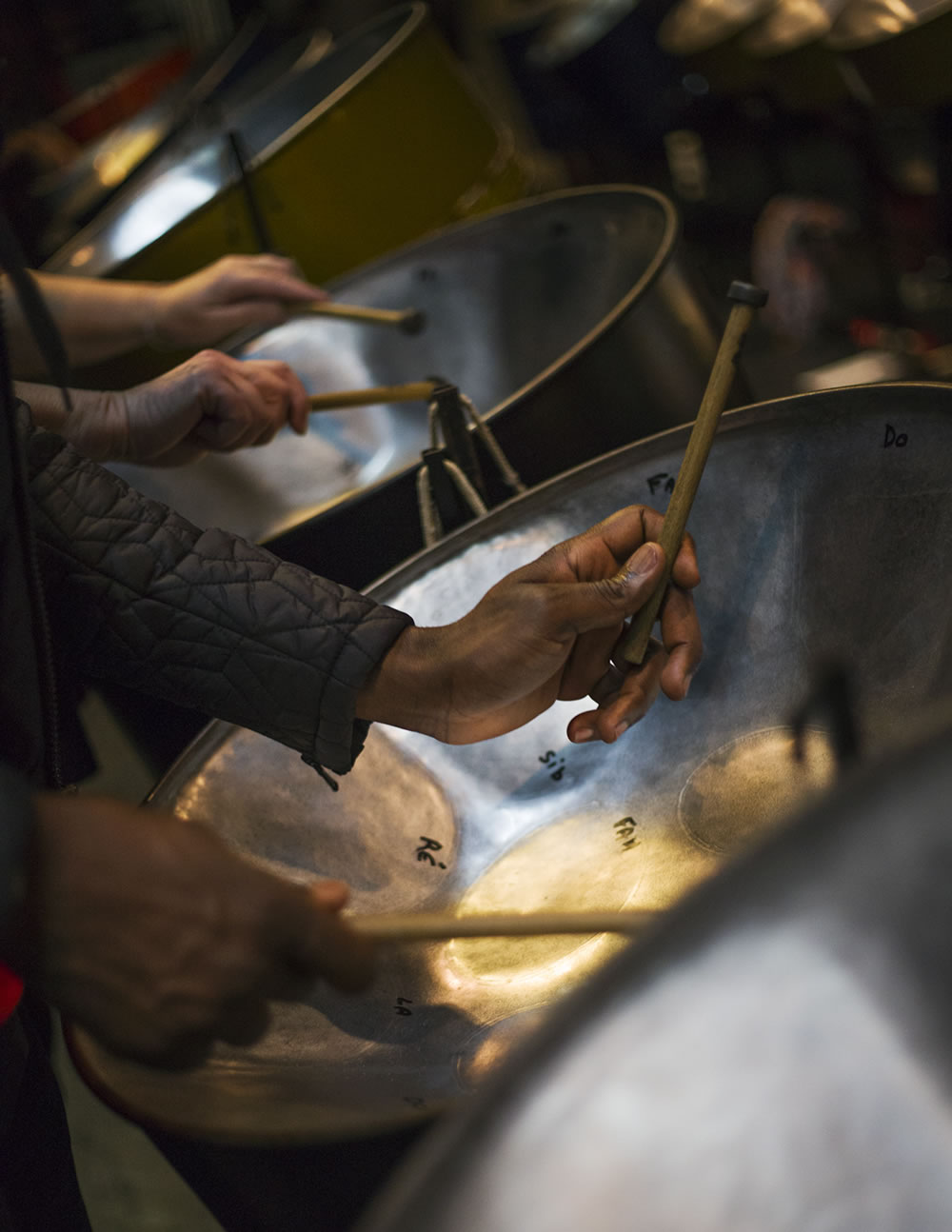
SteelDrum_1146

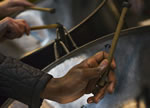
Rehearsing on an alto steel drum at the MPAA in Paris, pre-concert. The MPAA (Maison des Pratiques Artistiques Amateurs) is a cultural institution that makes music and art accessible to everyone, offering affordable classes, workshops and concerts.

Paris-based photographer Danielle Voirin travels the world and documents her experiences in photographs. She takes street photography and photojournalism a shade beyond even art, to the level of mysticism. You may see more of her work on her website DanielleVoirin.com, or her alt website, DaniVoirin.com.

Danielle Voirin’s Photo of the Day for 04.13.15

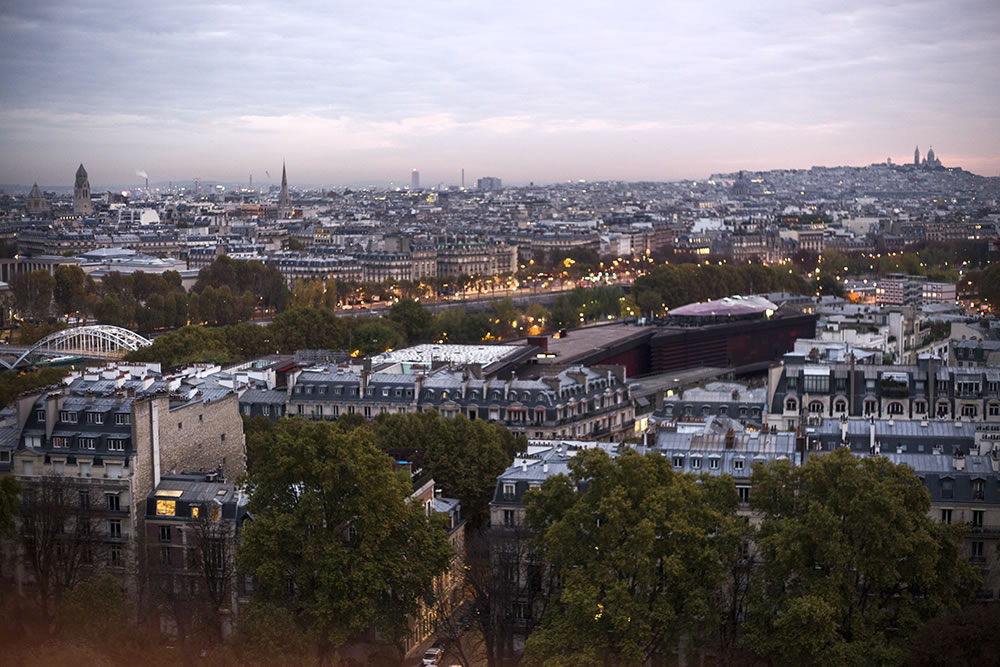
A 6am call-time for a video shoot on the 2nd floor of the Eiffel Tower means you're tired, but so grateful to watch the sun rise over Paris.  On the left you can see the pedestrian bridge Passerelle Debilly, the red building center-right is the back of the Musée du Quai Branly, and up on hill to the right you can see the Sacre Coeur on top of Montmartre.

A 6am call-time for a video shoot on the 2nd floor of the Eiffel Tower means you’re tired, but so grateful to watch the sun rise over Paris. On the left you can see the pedestrian bridge Passerelle Debilly, the red building center-right is the back of the Musée du Quai Branly, and up on hill to the right you can see the Sacre Coeur on top of Montmartre.

Paris-based photographer Danielle Voirin travels the world and documents her experiences in photographs. She takes street photography and photojournalism a shade beyond even art, to the level of mysticism. You may see more of her work on her website DanielleVoirin.com, or her alt website, DaniVoirin.com.

Reacquainting with the Castaway Self through Eris

In lieu of Amanda Moreno’s column this week (she plans to be back next weekend) I thought I’d offer readers a couple of Eric’s previous columns on Eris. Eris — the planet ‘responsible’ for Pluto’s demotion in astronomy — is encountering conjunctions from Mercury (exact yesterday) and the Sun (exact today).

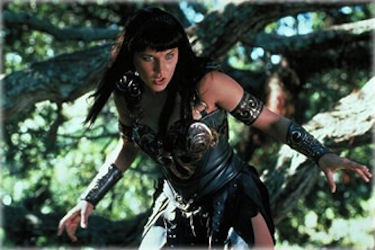
Lucy Lawless as Xena the Warrior Princess, after whom Eris got its temporary, provisional name after being discovered. Photo courtesy of Pacific Renaissance Pictures Ltd.

Lucy Lawless as Xena the Warrior Princess, after whom Eris got its temporary, provisional name after being discovered. Photo courtesy of Pacific Renaissance Pictures Ltd.

As you feel for what form your inner Eris is taking this weekend, and sort out how to work with the themes her archetype represents, these pieces may give you some context and points of orientation.

In Eris Notebook: Dancing with Discord, Eric offers a brief history of the discovery and naming of Eris before diving into the Chiron-Eris conjunction of the early 1970s. The modern feminist watershed of that era explains this conjunction perfectly. Eric writes:

Many things occurred during that era, but for sure it was the watershed of modern feminism. Feminism is not just about women’s rights. It is about deconstructing the known order of the world, which tends to largely be based on gender roles. When you suspend or even question gender roles, you basically get a form of chaos. It’s impossible to see the extent to which people cling to those roles until you take them away for a moment or two.

You’ll also encounter sex-positive masturbation pioneer Betty Dodson’s thoughts on the subject, and a short timeline of events of the early ’70s emblematic of the social chaos at hand.

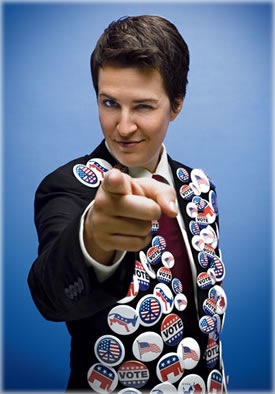
Another way to get a more tangible sense of Eris is through the chart of a famous person. In Rachel Maddow: The Apotheosis of Eris, Eric uses the occasion of 2010’s Sun-Eris conjunction to investigate the natal chart of Rachel Maddow.

Rachel Maddow in a PR photo.

Rachel Maddow in a PR photo.

Born in 1973, Maddow not only has the Sun conjunct Eris in her chart, but those two bodies are also still conjunct Chiron — plus, Venus is right there, too.

In the case of Maddow, we don’t so much get the fractured/chaotic/snubbed quality of Eris. What we get is a sense of what it looks like when someone (especially a woman) embodies the positive aspects of Eris. Maddow is self-assured; and while she stirs things up, it seems to be a result of her simply being who she is, fully and with awareness — rather than a shadowy, passive-aggressive form of provocation.

As Eric writes, “In the form of Rachel Maddow we have an example of someone expressing the [Eris] energy clearly, authentically and in a way that challenges us to wake up and pay attention.”

If you’re paying attention to the Eris archetype in your life this weekend — either in shadow form or in a fully conscious, embodied, productive form — I welcome your comments below.

Please note that the two articles featured in this post come from the archives of Planet Waves’ membership subscription service. These editions, emailed every week, form the core of the fantastic resources you receive when you sign up for our Core Community Pass. You can read more about what’s included in Core Community at that link. Have questions? Email Chelsea at chelsea@planetwaves.net, or give Planet Waves a call at 877-453-8265 (or 206-567-4455 from outside the US).

Without these for-pay services, this website could not be here hosting your favorite authors and some of the most relevant, astute, inclusive and growth-oriented (and ad-free!) conversations on the Internet. I hope you’ll consider signing up. — Amanda P.

Weekend Tarot Reading — Sunday, Apr. 12, 2015

By Sarah Taylor

This week, after an all-Majors reading last week, you’re back into the day-to-day experiences of life. Well — for the most part: the Ace of Swords signals something that is available to you, if not if not immediately apparent. As with all Aces, it isn’t going to fall into your lap as much as you will need to reach out and help yourself to what it offers. Yes: you will need to help your self.

ace_swords_two_swords_five_cups_rohrig_sm

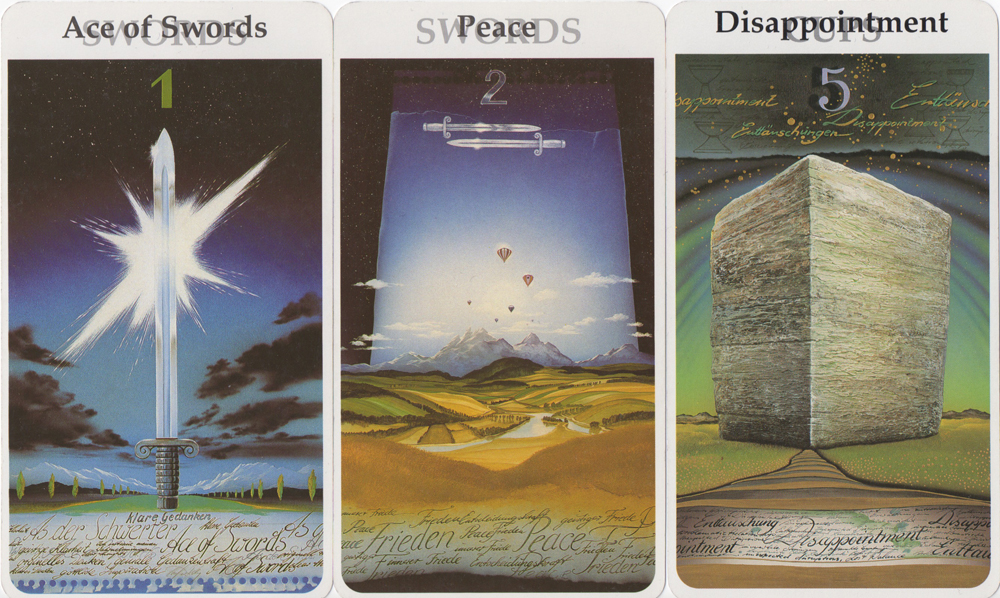
Ace of Swords, Two of Swords, Five of Cups from The Röhrig Tarot deck, created by Carl-W. Röhrig. Click on the image for a larger version.

And because the reading returns you to the quotidian, you’re also in the realm of what is tangible (though, again, keep an eye on that Ace, which will be more subtle) — so here you’ll really be able to feel what’s going on, and to apply some mental equilibrium to those feelings.

When you look at the three cards in front of you, imagine you’re looking at a seesaw. You have the two cards on the outside, at each end of the seesaw, and then the card at centre as the fulcrum. I’m going to start first with the card on the right, then the card on the left, and finally that point of balance in the middle.

Imagine what it is going to take in your life to get this seesaw to work when you have what you have seated on the right — namely, a bloody big rock. How the hell do you manage to get anything moving — how do you manage to move forward in your life — with the Killjoy-Cube-of-Disappointment that has just whumped! itself down into your life, obliterating the path you were quite keen on taking? That cube even seems to have a voice in this reading. It’s sitting there, practically crossing its arms, uttering that one phrase guaranteed to stop you in your tracks:

“I am so disappointed in you.”

The heart becomes heavy, the inertia of your situation weighs your world down around you. You see little else but this cube. In fact — is this your heart? Is that what you’re looking at when you see it? Is this the shape and inner texture of your feelings? Or maybe something is beating at the centre, if only you could get to it. But how do you move it? How do you get that seesawing momentum back into your life — a life where change is inevitable, yes, but where things move through and move on out because of that inevitability?

The paradox is that even if that rock is immovable, it is not. That seesaw is designed to balance; and here, on the other side, is what you currently have at your fingertips to negotiate a path through Disappointment.

The Ace of Swords is associated with the element of Air, while Cups are associated with Water. Swords are also the masculine counterpart to the Cups’ feminine. Swords represent the mental plane — your thoughts — and the Ace, being the infinite aspect of its suit, is “insight” in its most clear form. Obviously, as with all Aces, they cannot exist in their entirety here on Earth. However, we can avail ourselves of their gifts and use them to the best of our abilities.

This means that what you have available to you, to use in accordance with your means, your imagination and your abilities, is insight. Discernment. Wisdom.

If you look at both cards on either side of the fulcrum — the Five of Cups and the Ace of Swords — you will see that there are some key similarities to the two of them. Both sword and block sit on paths; both have vertical planes; both have mountain ranges in the background; both have blue skies. However, with the Five of Cups, that sky is ‘creased’ — as if there is an interference in that clear thinking because of the sheer magnitude of what is in front of you.

You know what I want to do when I look at the Ace of Swords? I want to take it in the way that I know how, and start using its diamond blade in the service of revealing what that rock really is underneath all of the rough edges and the seemingly impenetrable coldness. I want to find the beating, red heart of Cups. I want to liberate it from the layers and layers of fossilised feelings that are so effective in their own way, because they protect what’s inside as well as hide it.

That voice keeps talking: “I am so disappointed in you.” You can listen; or you can see it for what it is: a voice that belongs to the past, not the present. The Ace is there to cut away what still has a grip but which is so old that it is calcified and unfeeling.

Insight. Discernment. Head balanced healthily with heart. Head to reveal the heart. The Ace is offering inner vision to get to the truth of what is going on, and the truth of who you are. You can take it. It is yours to wield.

When that happens, things start moving, and the card at centre — the Two of Swords — holds the shape of that movement; a transition into blue skies towards the horizon and a different landscape that rises over it.


========

Aces are significant cards to me personally. As a tarot writer, they hold the promise and potential for the right and righteous balance of creativity, heart, intellect and skill that I can then choose to draw from. Aces are also symbols of initiation, and it was an Ace — the Ace of Wands — that initiated me as a writer for Planet Waves by accompanying my first article nearly five years ago.

In Summer 2010, Eric took a chance on me and my tarot abilities and invited me to write a tarot column for this site. In essence, it was through his invitation that an Ace was held out to me, and I chose to take it. I have been ever grateful for this — not simply because of the opportunity to write, but also to participate in a community that has both helped me to discover more of who I am at heart, and supported me through some significant changes. The writers that we have here embody the Aces in all their forms, and I am privileged to be counted among them.

If you have considered taking out a Planet Waves membership, and haven’t yet done so, then this is my invitation to you to consider again. The site relies on its subscribers to keep this great content going, and has refused, time and again, to bow to pressure to derive revenue from third-party advertising.

If you’re interested, you can subscribe here. If you’re interested but you feel it’s a little beyond your means right now, then contact Chelsea at the number at the top of this page and see if there’s a plan to be made — and there frequently is.

With many thanks.

Sarah

Astrology/Elemental correspondences: Ace of Swords (the pure, limitless potential of Swords/Air), Two of Swords (Moon in Libra), Five of Cups (Mars in Scorpio)

If you want to experiment with tarot cards and don’t have any, we provide a free tarot spread generator using the Celtic Wings spread, which is based on the traditional Celtic Cross spread. This article explains how to use the spread.

How Anger Can Heal Us

Editor’s note: This week’s column on sex and relationships comes to us courtesy of Psychology Tomorrow, the website edited by Stanley Siegel, LCSW. I’m not sure I agree with all of the things he categorizes as “love”; yet I see his point. As we experience Mercury and the Sun conjunct Eris, we may find we have anger to express, process and embrace. — Amanda P.

By Stanley Siegel, LCSW

Anger, generally considered the most forbidden and primal of all emotions, is more accurately the most complex, nuanced, and misunderstood, particularly by mental health professionals.

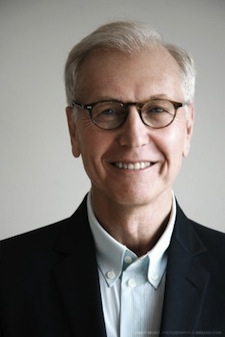
Stanley Siegel, LCSW, editor in chief of Psychology Tomorrow.

Stanley Siegel, LCSW, editor in chief of Psychology Tomorrow.

Anger has positive psychological and social purposes that range from releasing negative sentiment to motivating us to find solutions — to correct wrong behaviors, challenge social injustice, and redress grievances. At times, we harness anger strategically with the goal of restoring emotional or social balance. In general, anger mobilizes our psychological resources and boosts determination.

How we perceive anger and the behavior associated with it is culturally and generationally determined. Experts have identified broad social factors that may be responsible for creating the climate in which anger may turn to violence, including poverty, income and gender inequality, and the overuse of alcohol and other substances. Because, as a society, Americans fear the loss of self-control through the “progression” of anger to violence, we have regulated it through laws, religious customs, therapies, medicines, and social punishment.

But, what most experts fail to understand is that the cultural and individual suppression of anger causes potentially greater harm.

When anger is ignored, denied, or repressed, it festers or flares, eventually finding expression through illness, poor judgment, passive-aggressive behavior, violence, suicide, or even terrorism. The classical definition of depression is anger turned inward.

Still, what may be even more shocking is the historical evidence suggesting as strong a relationship between violence and love as between violence and anger.

An honest look at love over the course of history reveals that what people have framed as the love of God, Monarch, Country, Money, and Power has led to more death and destruction than any single motivating emotion. The Crusades, Inquisition, WWII, and Middle East Holy Wars are high on this list of love and loyalty’s consequences. Although more benign, “romantic love” frequently leads to disillusionment, heartbreak, or despair, the source of much of our domestic violence or “crimes of passion.”

As a society we blindly ignore love’s darker side. We pursue love as if it were the holy grail, applauding its daily expression and even inventing holidays like Valentine’s Day and Mother’s and Father’s Days to acknowledge love’s loyalty. We engage in classes based on intimacy and love, which teach us to suppress or substitute anger with forgiveness, meditation or prayer. And with the assistance of trained professionals, we promote “anger management” courses or behavioral therapies that shame people for openly expressing anger and train them to use reason instead.

In effect, we are using “psychological treatments” that defy the natural laws of human emotion and unwittingly contribute to our overall sense of fear, confusion, and instability.

In fact, anger and love share the same purpose: to help resolve some of life’s difficult dilemmas. One is no less valuable than the other in that purpose, and both potentially have undesirable consequences. Anger helps us heal from an emotional injury or threat, real or imagined. And while love’s energy is directed toward finding wholeness through mutual exchange or coupling with another, in anger we seek wholeness by separating from the world. Anger ultimately serves to balance us. Through it we find affirmation and integrity as we attempt to restore our sense of well-being.

Continue reading here.

—————-

Stanley Siegel, LCSW, is a psychotherapist, author, international lecturer, and former Director of Education at New York’s renowned Ackerman Institute for Family Therapy. With over 36 years of experience, Siegel has developed an unconventional and highly regarded approach to psychotherapy. His latest book, Your Brain on Sex: How Smarter Sex Can Change Your Life is out now.

Breaking Down The Walls

By Judith Gayle | Political Waves

Some things don’t change quickly, some things do. What seldom changes is humankind’s aversion to pain, to discomfort, which is a real shame since that’s the one short-cut, the single take-no-prisoners corridor through chaos and out the other side of lingering dysfunction. What seldom changes at all is the process by which we assess risk.

275+Judith_Gayle

In the simplest possible terms, we don’t change quickly because we’d have to think outside of the box, perhaps risking all those things we’d stuffed inside it, and that frightens us enormously. I read today that Lowes Home Improvement will no longer sell bee-killing pesticides known as neonicotinoids — but that won’t start until 2019, as alternatives can be developed. Let’s hope that all the bees don’t die in the next four years, then, along with half our crops. We’re not so good at the kind of in-the-moment improv needed to face reality squarely, obviously, or we’d yank the rip-cord on all things climate change and let the deniers go pound salt.

Although it doesn’t necessarily follow, thinking outside of the box appears to be throwing the box under the bus to those depending on its walls to keep them secure, and scares the bejesus out of the natives. That changes slowly, but it does change. Take the Pope, for instance. This is a man who selected a very tight box for himself and yet he’s managed to push out the walls to such a degree that a lot of traditional Catholics are pissed at him.

Even in South America, where he practiced a very populist form of Jesuit ministry for the poor and disenfranchised, a number of his followers have protested his embrace of markedly non-conservative activity. Francis is a man following his conscience, living as simple a life as he’s allowed and practicing tolerance and inclusion wherever he can. And no one can doubt his courage, going after the Mafia during Easter Week, accepting evolution as a possible form of God-activity, and calling the Koran a book of valid spiritual teaching, Islam a religion of peace earlier this year.

This coming week, at the Summit of the Americas in Panama, Obama will likely meet face-to-face with Raul Castro, seemingly poised on announcing the removal of Cuba from the list of terrorist-sponsoring states, if not lifting sanctions entirely. Perhaps a bit too soon for the conservative public, and still a toss-up as Obama continues to consult his advisers, these measures are in the works as Cuba attends the Summit for the first time since its inception in the early 1990s. And give the devil his due, this project would not be so far along without the urging of Pope Francis, who acted as middleman between the two governments.

It would seem the little man born of Italian immigrants in Buenos Aries, and the half-African half-American kid born in Hawaii, share an ethical core. Which is not to say that Pope Frank is changing the face of the church into a liberal entity. He hasn’t come out for gay marriage, married priests, women priests or birth control, nor will he and keep his job. Despite his personal acceptance of diverse characters, his official position on gay ambassadors, for instance, remains stonewall (despite, or perhaps because of allegations of overt Vatican gay culture).

But his open mind and think-outside-the-box manner have charmed not just non-Catholics in this country but disenchanted Catholics who have left the church behind. He’s a man of the people and his teaching on poverty and justice, along with a fiery rebuke of renegade capitalism, hasn’t won him any fans on the far-right. He’s hardly the darling of the tradition-steeped, deeply incestuous and politicized church, the one that is still at war with the Reformation. His own Bishops are deeply divided, especially in this country.

Within the uneasy alliance with evangelicals, those who counted on backing from the Catholic hierarchy, like Sara Palin, have questioned his bona fides with Gawd Almighty.

Some among his own have complained that he’s less progressive than ‘radical,’ perhaps sent from the Devil as a liberalizing influence to destroy the church. It’s been whispered that he’s an anti-Pope, like the black guy in the Oval Office is an anti-president: neither of them fit to serve. In fact, FOX News calls him the “Barack Obama of the Vatican.” The walls of that long established patriarchal box hold tight, in some quarters.

In discussing the outreach to normalize Cuban relations, Obama told a group of listeners, “Engagement is a more powerful force than isolation. I believe that we can move past some of the old debates that so often define the region, and move forward.” Read between the lines of this situation and you’ll find the Obama Doctrine, as we have learned to recognize it: reach out a hand for a diplomatic partner and see what happens.

This is is the same open hand that Francis is offering, an attempt to define similarities rather than differences. The different world views — with both the President of the United States, and the 266th Catholic Pope — are real enough but the spirit of their conversation asks for respect rather than derision, collaboration and win/win rather than zero sum. Somewhat odd bedfellows, they are both sons, although in different ways, of liberation theology.

You will remember ‘liberation theology’ as the buzzwords that came along with candidate Obama’s churching history under the tutelage of the Reverend Wright in Chicago, creating a rift between the two (mentored and mentor) that, at last report, remains unhealed. Francis seems to have experienced his own liberation epiphany after very public failure within the ranks of the church, as outlined in this excellent Rolling Stone piece from last year.

Both of these men have more than passing acquaintance with oppression, poverty and diversity. That this philosophy is identified with Marxist thought is enough to land these two world leaders under the ‘pinko’ umbrella that conservatives save for the real troublemakers. Rush Limbaugh considers Pope Frank a “pure Marxist” of course, and the Kenyan a “pure Islamist.” You’ll forgive me, I trust, if I mention that I consider Rush a pure idiot, and someone whose bust does NOT deserve a place in the Missouri statehouse beside the likes of Mark Twain and even feisty old Harry Truman.

The Pope will visit the U.S. later this year, facing covert hostility from within his ranks and the conservative press, but I expect him to be warmly received by the American public. He will address a joint session of Congress, and I have hopes that he will do that of which we’ve seen him capable: speak truth to power. It might move few conservative hearts, but I bet it will move the needle on America’s perception of conservative politics.

The most important realization I can think of, in terms of rehabbing ethical behavior as an American standard, is exposure of the stiff-necked, punishing and self-serving philosophy dished up to the American public as politically-packaged Old Time Religion. The walls of that selective little box need busting down in the worst way.

There is every indication that those walls of stilted regressivism are shakier than the many Republican candidates think, but it’s the walls we’ve got, right? Gotta keep them high until we can replace them with something that keeps us — and all our stuff, and our ability to get it and keep it — safe. Unthinkable to risk more, even if the box is the devil we know and chaos reigns inside.

Or maybe not. Maybe we can speed that up.

I read an article awhile back about Jon Stewart’s brain. Don’t worry, it’s fine — in fact, it’s better than fine, according to a neuroscientist at Mount Sinai Hospital who cited him as an example of someone who thinks outside the box. Tracking brain changes in improvisational rappers and jazz musicians, she suggests that the differences between learned comedy routines and those realized in the moment would also show up on a brain scan as highly creative thinking. She says, of Stewart:

“I recently saw him in person, Jon Stewart. He is just brilliant at being in the moment and putting together separate ideas — he would take things that had occurred earlier in the night and then weave them together with other things that were happening in the moment. And you knew it couldn’t have been prepared in advance.”

“Quick-witted would be the layman way to put it; he’ll be interviewing someone on The Daily Show, and he’s just very quick, very quick at making these unexpected connections. But the term we would use for that is divergent thinking — that is, making novel connections between things that other people don’t put together, and finding the humor in that. You could also think of it as just “thinking outside the box.””

We need to start recognizing what thinking outside the box looks and sounds like. It happens in the moment, it happens when we really LISTEN. It comes bubbling up from our ability to connect dots and keep focus, it’s creative and imaginative. It takes in the whole picture, not just what we want to know but what there IS to know.

This is a necessary skill to acquire, my dears. None of us are pure left or right, male or female, good or bad. We are, each of us, an amalgam of everything we’ve ever done or seen, all we’ve felt and imagined. We all live in boxes of our own making but not all of us are stuck.

Barack Obama is an establishment president, business-friendly and too moderate to impress some on the left, but he seems determined to put a progressive stamp on his last months in office. He’s not a people-person, so much as an academician given to asking questions of everyone in the room, soliciting opinions to get a complete picture. Then, and only then, does he make up his mind. From what I’ve seen, once he does, there’s nothing wimpy about this Leo. He has a reputation for being quick-witted and open to productive ideas and creative solutions. He lives in a very tight box, but he’s been dedicated to projecting outside of its structured restraints to change the face of American power, and it seems to me he’s been amazingly successful for a Kenyan.

Pope Francis is a people-person, more at home with one-on-one conversations than as the formal face of the church. He has suggested that he may retire before his tenure is done, but until he does, he will make the powerful uncomfortable and the victimized welcome in his church. He may not punch his way out of the tight walls he’s chosen for himself, but he’s made enough holes in them already to invite some in who will change the intent of the institution long before the leadership does. Sometimes the smaller picture — washing a prisoner’s feet, kissing the bambini, eschewing the trappings of a Prince of Rome for the garments of a servant — provides an experience of love far superior to notions of divine authority and church dogma.

We all live in some kind of box, some kind of structured system that we’ve accepted as true. Perhaps the walls are less rigid than we think, perhaps the space far more limited than need be. Perhaps a bit of practice at connecting dots, finding commonality and keeping an open heart will grow the space we inhabit to include us all.

One last comment, today, something I’d like to share. I don’t know about you, but I’m rarely surprised by much. I can almost always find a place in my extensive system of mental file-folders to tuck information and occurrences. But this week, something changed. I’ve had two dreams now, one after another, that are 3D paradigm-breakers.

Last evening, when my son mentioned that he’d had weird dreams the night before, I told him I’d had a disturbing one. I don’t have nightmares, not since I was a kid with repeaters that disappeared when I finally recognized them as incarnational, but occasionally I’ll have one that leaves me disquieted upon waking. I had one night before last, leaving me with questions about reality. I just didn’t know where to put it.

Then, last night, there it was again — a different set of circumstances resulting in exactly the same ah-ha! moment — surprising me, and asking me to push past the walls of old thinking and realize how multi-dimensional I am, you are, we are. The thought is not new, nor is even a multi-dimensional experience, but the uniqueness of this realization is so different that I can’t quite yet describe it. All I can say is that we’re bigger than we think. We’re braver, too.

We’re changing because we have to. Others have done some of our heavy lifting for us, made it possible to follow. Some of the most gentle and reasonable of the voices urging us forward have already proven that compassion and cooperation lift us faster and higher than unnamed fears can frighten us into downward spiral.

We have the option of continuing to be frightened and helpless, defensive and hostile, or changing the way we fit into this little box of ours. The walls are falling. Push a little, see what happens.

Danielle Voirin’s Photo of the Day for 04.10.15

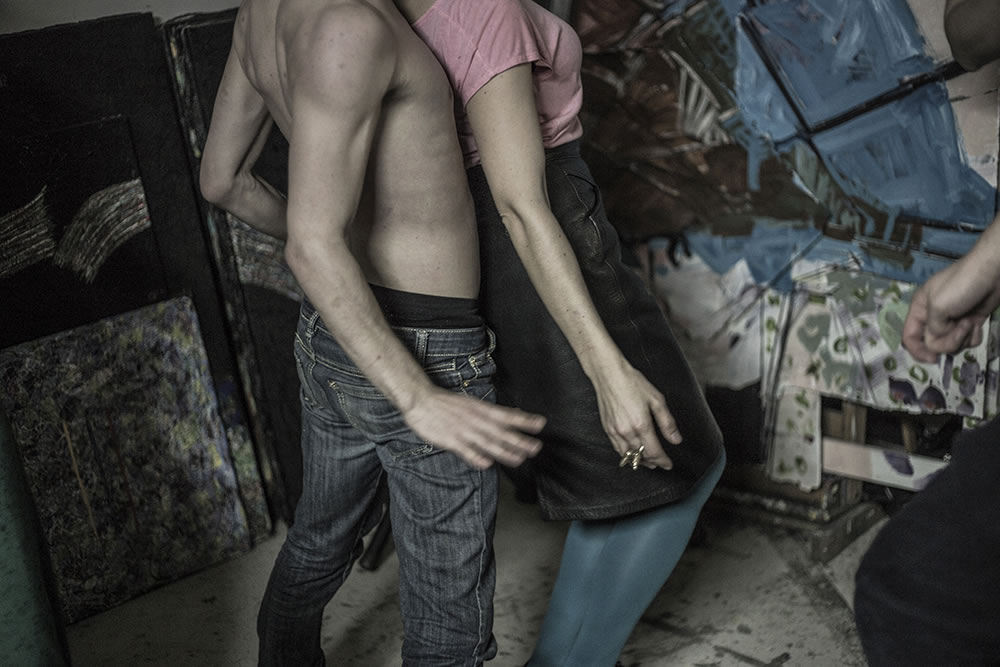
Bonding through dance, at a party in the art studios of 59 Rivoli in Paris.

Bonding through dance, at a party in the art studios of 59 Rivoli in Paris.

Paris-based photographer Danielle Voirin travels the world and documents her experiences in photographs. She takes street photography and photojournalism a shade beyond even art, to the level of mysticism. You may see more of her work on her website DanielleVoirin.com, or her alt website, DaniVoirin.com.

So Your Heart May Know

Venus will enter Gemini on Saturday at 11:28 am EDT (15:28 UTC) so your heart may begin to know what has eluded its understanding. That’s the implication. It has to do with both the relationship and recent history of Venus and Gemini. It’s also a matter of how this year’s ingress of Venus into Gemini is timed.

len-wallick-logo

Venus and Gemini have a subtle relationship. The ascending (or “North”) heliocentric node of Venus is in Gemini. If you’ve read about the Moon’s North and South nodes, you have some familiarity with the term; I’ll explain more in a moment.

Venus is also the ruler of Gemini for the modality known as esoteric astrology. As its name implies, esoteric astrology is concerned with mysteries (such as the concept and condition of “soul”). Often such mysteries are best (or even only) grasped by feelings, intuitions and other sensitivities associated with the human heart. Interestingly, the interpretation of nodes in astrology also has an esoteric slant. 

The ascending heliocentric node of Venus is where its orbit rises above the ecliptic. The ecliptic is the plane of reference defined by the Earth’s orbit around the Sun — or, from our perspective here on Earth, the Sun’s path across the sky.

According to Philip Sedgwick, the sign placement of the ascending node of any object orbiting the Sun speaks to that object’s “mission statement.” Hence, any defining aspirations associated with Venus are informed by Gemini.

Gemini is a mutable air sign ruled by Mercury. As Amanda Painter averred in her blog earlier today, one of versatile Mercury’s primary correlations is with “your intellectual mind.” The air element, which contributes to define Gemini, likewise has a correspondence to intellect. The mutable quality, which also combines with symbolic air to further distinguish Gemini from other zodiac signs, reflects the “mercurial” (or changeable) nature of the sign.

But Venus is not Mercury. The nature of Venus is not intellectual. In the words of Robert Hand, “In its highest manifestation, Venus is love, the emotion that brings people together without force or compulsion.” In other words, Venus is of the heart, not the mind.

But the heart needs the mind (just as the mind needs the heart) to know what it cannot understand on its own. That’s what Venus finds in Gemini.

Venus and Gemini also have a powerful recent history. On June 8, 2004, and again on June 5 (or June 6, depending on your time zone) 2012, Venus was in Gemini when it transited across the face of the Sun from our perspective here on Earth. A Venus transit of the Sun is very rare. The next matched pair will not take place until Dec. 11, 2117, and Dec. 8, 2125.

The most recent pair of Venus transits took place just before Uranus in Aries and Pluto in Capricorn aligned into the first of seven exact square aspects (separations of 90 degrees) over three years. This era-defining series itself concluded only last month.

Finally, only days ago, we emerged from a two week-period between two exceptional eclipses, the combined like of which have not been seen in centuries, if ever.

Hence, the timing of Saturday’s Venusian ingress to Gemini follows on the heels of a series of seldom-seen (sometimes unprecedented) astrological landmarks. Each of those cosmic milestones have been repeatedly defined and quantified in intellectual terms like date and degree.

Yet, for many of us at least, our hearts have yet to grasp the enormity (much less the meaning) of it all. Especially with the conflation of equally momentous world events and tumultuous personal experience, the like of which no previous generations (or incarnations) have ever seen.

Hence, my suggestion of a reasonable (if slightly edgy and unconventional) way to anticipate and avail yourself of Venus moving through Gemini beginning Saturday and through until May 7. Make it a time for your heart to better know and more deeply understand what your mind has ascertained, so as to better qualify the whole of what you have become.

Offered In Service

Len is available for astrology readings. You can contact him at lenwallick [at] gmail [dot] com.