Author Archives: Amanda Painter

Mars Conjunct Pluto: Get Constructive, Not Explosive

Whether you’re celebrating or trying to pick yourself up and dust yourself off after Tuesday’s elections, note the palpable tension still in the air. It’s not all politics, and it’s not just you; for one thing, we have the Taurus Full Moon today (Thursday). But something even bigger is brewing.

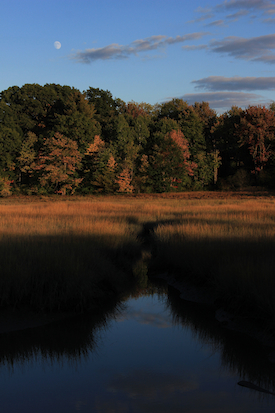
Photo by Amanda Painter

Photo by Amanda Painter

Exact at 5:23 pm, the Moon in Taurus opposes the Sun in Scorpio. This is the Taurus Full Moon.

Any interpersonal situation where material possessions, shared resources/money or sex is concerned — especially if one or both of you is feeling some fear around there not being ‘enough’ — may be feeling especially polarized right now.

Consider grounding yourself today with activities that put you in touch with your body. In any stalled intimate situations, things may begin to resolve themselves later in the evening.

Even so, we’re still in a potential hot zone. This is thanks to Mars working into a conjunction with Pluto in Capricorn, exact Nov. 11 (and shortly thereafter, a square to Uranus in Aries).

Continue reading

Recovery and Discovery

Dear Friend and Reader:

Despite lacking the cuddly reputations enjoyed by most mammals, reptiles and amphibians are still integral members of the planet’s ecosystems. And according to a study published in PLOS ONE and reported in Science Daily Oct. 28, the highly specialized Galapagos Islands ecosystem can now boast the recovery of endangered giant tortoises on the island of Espanola.
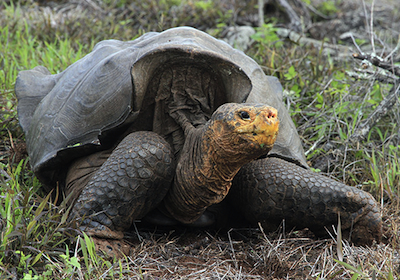
One thousand tortoises may not sound like a lot, but on the Galapagos island of Espanola, that counts as a hugely successful recovery. Photo by James P. Gibbs/SUNY-ESF

One thousand tortoises may not sound like a lot, but on the Galapagos island of Espanola, that counts as a hugely successful recovery. Photo by James P. Gibbs/SUNY-ESF

Feral goats brought to the island in the 19th century had ravaged the tortoises’ food sources.

The goats have since been eradicated, and 40 years ago captive-bred tortoises were re-introduced by the Galapagos National Park Service.

“The global population was down to just 15 tortoises by the 1960s,” said James P. Gibbs, a professor of vertebrate conservation biology at the SUNY College of Environmental Science and Forestry and lead author of the study. “Now there are some 1,000 tortoises breeding on their own. The population is secure. It’s a rare example of how biologists and managers can collaborate to recover a species from the brink of extinction.”

Meanwhile along the Mid-Atlantic coast of the U.S., biologists have confirmed the existence of a new species of leopard frog, reported Science Daily Oct. 29. Ecologist Carl Kauffeld first described the frog in a 1937 paper, but lacked the technology to prove it was in fact distinct from two similar species in the New York / New Jersey region.

Forty years after Kauffeld’s death and nearly 80 years since his paper, Rutgers doctoral candidate Jeremy Feinberg and a team of scientists have confirmed that Feinberg came across the frog six years ago in the marshes of Staten Island, not far from the Statue of Liberty. Unlike Kauffeld, Feinberg and his team had the benefit of genetic testing and bioacoustic analysis — plus volunteers from Connecticut to North Carolina, some with the North American Amphibian Monitoring Project, collected key data.
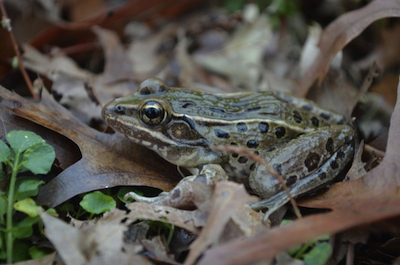
"I toad you so!" At least, we can imagine that's what Carl Kauffeld is saying now that researchers have confirmed his discovery. Photo by Brian R. Curry/Feinberg et al.; image reversed for this publication.

“I toad you so!” At least, we can imagine that’s what Carl Kauffeld is saying now that researchers have confirmed his discovery. Photo by Brian R. Curry/Feinberg et al.; original image reversed.

“If there is a single lesson to take from this study, it’s that those who love nature and want to conserve it need to shut down their computers, get outside and study the plants and animals in their own backyards,” said co-author Brad Shaffer, professor in UCLA’s Department of Ecology and Evolutionary Biology.

Fittingly, Feinberg and his team have named the frog, which has been hiding in plain sight in New York City and across eight states, after Kauffeld: Rana kauffeldi. But you just call it the Atlantic Coast Leopard Frog.

Deforestation Debilitates the Amazon — and Global Climate

Meanwhile the Amazon rainforest, which is home to more than 400 frog species, may be losing its ability to benefit the climate, The Guardian reported Friday. The study, by a leading expert in Brazil, suggests the cumulative effect of deforestation has possibly caused worsening droughts; the forest had helped to channel water inland.

The author, Antonio Nobre, said, “Studies more than 20 years ago predicted what is happening with lowering rainfall. Amazon deforestation is altering climate. It is no longer about models. It is about observation.”
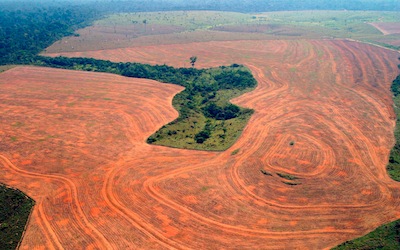
Area deforested by soybean farmers in Novo Progresso, Brazil, in 2004. Destruction of the world's largest rainforest increased by 29 percent in 2013 from the previous year, reversing what had been a downward trend. Photo by Alberto Cesar/Greenpeace.

Area deforested by soybean farmers in Novo Progresso, Brazil, in 2004. Destruction of the world’s largest rainforest increased by 29 percent in 2013 from the previous year, reversing what had been a downward trend. Photo by Alberto Cesar/Greenpeace.

Nobre is calling for the government to immediately increase efforts to halt deforestation and to replant trees. Recent satellite data, however, indicate an increase in deforestation activities, despite a downward trend dating to 2009. At this point, a burgeoning agribusiness lobby is making it harder to push through legislation that would create forest reserves.

“They have taken good action in the past,” says Nobre. “I hope they will listen now.”

One of the factors contributing to Brazil’s deforestation is its dependence on hydroelectric power generated within the Amazon Basin, which requires trees to be cleared for power lines and other infrastructure.

Maybe When It’s Dark We’ll See What’s Wrong?

Brazil is not the only area where dependence on electricity is problematic, and in fact blackouts are likely to become more commonplace worldwide in the near future as a result of the demand/supply imbalance, according to a new study published in Phys.org on Oct. 28.

The research, conducted by experts in architecture and sociology at the U.K.’s University of Lincoln, concluded that people are currently too dependent on electrical power, and noted that spare capacity for spikes in demand is being used up fast, with power usage still increasing sharply.

Sociologist Steve Matthewman further explained that privatization and resulting neglect of infrastructure are liable to lead to worldwide issues: “Single corporations can put their own interests ahead of the shared grid, and spare capacity is reduced in the name of cost saving.”

Nuclear Fuel Chemical Leak Under Investigation

In response to a leak of uranium hexafluoride on Oct. 26 at a uranium conversion facility near Metropolis, Illinois, the Nuclear Regulatory Commission (NRC) has launched an investigation, reported Reuters Oct. 28.
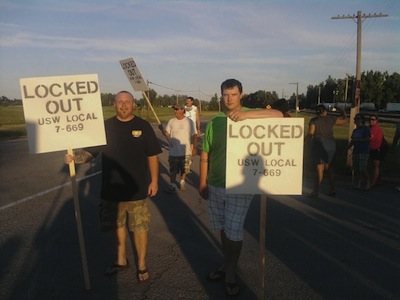
Photo of the picket line in front of the Metropolis Honeywell facility during the 2010-2011 union lockout. According to dclabor.org, the company has spent nearly six million dollars in the current election cycle. Photo by Stephenlach/Wikimedia Commons/USW Local 7-669.

Photo of the picket line in front of the Metropolis Honeywell facility during the 2010-2011 union lockout. According to dclabor.org, the company has spent nearly six million dollars in the current election cycle. Photo by Stephenlach/Wikimedia/USW Local 7-669.

Uranium hexafluoride, also known at UF6, is a radioactive substance that becomes chemically toxic when released into the air.

The facility in question, operated by Honeywell International Inc., converts raw uranium into a nuclear fuel precursor using a chemical process; that fuel can then be used by nuclear reactors as well as nuclear weapons.

“At this point we’re still in a fact-finding mode,” said Roger Hannah, an NRC spokesman.

“We haven’t come to any conclusions about whether processes weren’t followed.”

Honeywell confirmed last week that equipment failure was the cause of the release. The facility will remain closed pending the investigation outcome.

Some reports claim this “equipment failure” is linked to a labor dispute in which 135 union workers have been locked out of the facility following their contract’s expiration, leaving less experienced workers (namely “[college-aged] students and interns training to be engineers,” according to one resident) to operate the plant.

Depleted Uranium Use in Iraq Labeled Genocide

Use of depleted uranium weapons in Iraq by the U.S. and the U.K., beginning with the first Gulf War in 1991, has caused such severe effects that some are calling for it to be labeled genocide, according to Truthout reporter Dahr Jamail on Oct. 14. Depleted uranium is generally a byproduct of the production of enriched uranium for use in nuclear reactors and in the manufacture of nuclear weapons (see immediately previous item).

Photo of a March 2003 protest of the U.S. War in Iraq; studies of the increase in Iraqi birth defects were previously reported by The Guardian in 2010. Photo by Patty Mooney/Flickr.

Photo of a March 2003 protest of the U.S. War in Iraq; studies of the increase in Iraqi birth defects were previously reported by The Guardian in 2010. Photo by Patty Mooney/Flickr.

Illnesses resulting from the attacks include new organ diseases not previously seen in the region, immune system deterioration, congenital birth defects, miscarriages, cancers and kidney failure. Lack of documentation may mean that known cases are underestimates.

Oncologist Dr Jawad Al-Ali said, “Iraqi people were victims of the aggression inflicted by the use of DU munitions by the American and British troops during these wars, and this is genocide.”

Almost 10,000 rounds were used in the 2003 invasion. In response to the health crisis, Iraq recently called for a global treaty ban to all DU munitions.

The Center for Constitutional Rights in New York, on behalf of itself and Iraq Veterans Against the War, submitted in September a Freedom of Information Act request to the U.S. Department of Defense and the State Department, requesting the firing coordinates of the DU weapons used in Iraq.

Smile (or Not) — You’re on Candid Nuclear Plant Camera

Leaked photographs published by The Ecologist Oct. 27 reveal a potentially dangerous situation at Sellafield, a nuclear reprocessing site in Cumbria, England.

“Looking at the photos I am very disturbed at the degraded and run down condition of the structures and support services. There is a significant risk that the system could fail,” nuclear expert John Large told The Ecologist.

The photographs, taken over a period of seven years and submitted by an anonymous source, show the dilapidated state of high-level nuclear storage ponds at the site that was abandoned almost 40 years ago. The exposed, open-air storage ponds, packed with spent fuel, are currently undergoing a lengthy decommissioning process.

And From the David vs. Goliath Files:

Organic farmer and senior U.S. senator from Montana Jon Tester has succeeded in getting the Governmental Accountability Office (GAO) to look into the process by which the USDA and FDA have authorized genetically modified (GMO) crops, according to an Oct. 28 story by the Alliance for Natural Health.

Sen. Jon Tester is getting testy about recent USDA and FDA approvals of GMO crops. Photo by Charles Dharapak.

Sen. Jon Tester is getting testy about recent USDA and FDA approvals of GMO crops. Photo by Charles Dharapak.

Politico news service notes that in a 2013 letter to the GAO, Senator Tester asked government auditors to evaluate whether the “FDA has sufficient data to ensure the safety of genetically engineered foods,” as well as other issues such as cross-pollination of conventional crops and the impact GMO products have on U.S. trade relationships with nations that ban the import of genetically altered food.

Tester reportedly argues in the letter that the Coordinated Framework for Regulation of Biotechnology, which serves as the basis for regulating and approving genetically modified crops, has not been updated sufficiently over the last 30 years to guide lawmakers in assessing the latest developments in agricultural science.

Sounds like it’s well past time to bring the Coordinated Framework (and much else) up to speed.

Yours & truly,

Amanda Painter and the ECO editorial team

You may forward Planet Waves Monsanto Eco to your friends. They can sign up for this free environmental newsletter from Planet Waves. View this edition as a webpage.

Planet Waves Monsanto Eco (ISSN 1933-9135) is published each Tuesday evening in Kingston, New York by Planet Waves, Inc. Publisher: Eric Francis Coppolino. Editor: Amanda Painter. Business Manager: Chelsea Bottinelli. Web Developer: Anatoly Ryzhenko. Research, Writing and Editing: Planet Waves Monsanto Eco is produced by a team consisting of Amy Elliott, Carol van Strum, Len Wallick and Chad Woodward.


XConfessions and Erika Lust

We’re in the midst of some serious Scorpio astrology, marked by the intensification for many people of their erotic energy, the allure of secrets (and perhaps telling them), and a specific type of creative, transformative power that asks us for surrender. And so it seemed fitting to feature today the XConfessions website for your exploration and discussion.

Erika Lust

Erika Lust

XConfessions is one of several projects by Barcelona-based filmmaker Erika Lust. Registered users can submit (anonymously) their hottest secret fantasies or true sexual escapades from real life. Ms. Lust then chooses two of the confessions per month as her inspiration, and creates a 10-minute short film from each.

The film and the original confession get posted together; you can watch a trailer if you’re not registered — although all it takes is an email address to sign up for free, and anonymously, to see two films (and confess, if you feel so moved).

Ms. Lust explains on XConfessions that she was “Tired of the stereotypical porno-glam and porno-cheap imagery flooding the Internet,” and is looking to create “the most sophisticated and innovative crowd-sourced erotic cinema ever seen.”

Born as Erika Hallqvist in Stockholm, Sweden, in 1977, Ms. Lust is an independent filmmaker with a degree in political science with a focus on feminism. She has directed four award-winning erotic films in addition to the XConfessions shorts; her written works include Good Porn: a Woman’s Guide and The Erotic Bible to Europe.

She pledges “to create new waves in adult cinema, to show all of the passion, intimacy, love and lust in sex: where the feminine viewpoint is vital, the aesthetic is a pleasure to all of the senses and those seeking an alternative to porn can find a home.”

Scorpio is, after all, a feminine sign. The transformation of erotic filmmaking seems to be in promising hands.

A Scorpio Sky and Mars-Pluto Brewing: Go Deep

Mercury has been in direct motion for nearly a week (hallelujah!), although it’s still shaking things out at a slow speed; the last of the October eclipses occurred a week ago. Likely you are beginning to get your bearings again after what might have felt like a giant release-valve being let off.

Photo by Amanda Painter

Photo by Amanda Painter

As you do so, are you noticing a pull to feel things more deeply? We have a cluster of planets in Scorpio now: the Sun, Venus, asteroid Pallas and, later in the sign, Saturn. That’s a lot of Scorpio for a culture that tends to orient on mental activity, with so much information and trending so-called news stories and “social networks” at our fingertips.

With so much Scorpio, the draw is to go deeper: deeper into your emotions; deeper into potentially transformative experiences; deeper into your erotic urges and desires; deeper into your understanding of cycles of life and death.

Is it really any wonder that we get Halloween this time of year, with its emphasis on scary stories and images of death, ghouls, witches and so on? The nights are getting longer, and being afraid of the dark is ubiquitous. Yet many people are even more afraid of “going deep” than they are of the darkness night brings.

Then again, perhaps they are versions of the same thing. Both the dark and the depths ask us to surrender our surface-level perceptions, our daylight-based ego consciousness of our place in the world and who we are in it. To go deep or to be in darkness, we must allow ourselves to become vulnerable in some way.

Continue reading

Food for Thought

You can sign up for this free environmental newsletter from Planet Waves to be delivered to your inbox each Tuesday evening.

Dear Friend and Reader:

You’re probably aware that the discrepancy between the number of people on this planet who do not have enough to eat and the amount of food wasted annually is obscene; according to the United Nations, 1.3 billion tons of food is thrown away each year. In response, tech innovators are developing ways to facilitate getting ‘unwanted’ food to those in need.

NPR’s Marketplace Morning Report profiled long-haul trucker Richard Gordon and his brother Roger Gordon on Monday. For 30 years Richard has trucked food up and down the East Coast; sometimes a shipment — say, of eggplant — would be rejected for superficial reasons.

350+FoodCowboy_logo

“They say it should be dark or it should be purple. I’m not really sure what color eggplant is supposed to be, but a lot of times, eggplant is refused because it’s not the color they want,” Richard explained to NPR’s Sasa Woodruff.

“Or you might get a load of potatoes with too many eyes in it or too many curves and they reject it for that reason.”

When that would happen, he’d call his brother Roger to see if he could find a place that would accept the produce as a donation.

Eventually Roger decided to try taking the middleman out of the equation, and two years ago he launched a web and app service called Food Cowboy. It connects truckers with food charities and other entities along the commercial food chain. Those accepting the food pay 10 cents per pound; suppliers write off the donation on their taxes.

Rejected or excess perishable food needs to get to someone who can use it quickly, so it’s no surprise that food-rescue apps are being developed all over the U.S. to serve local communities (and elsewhere, including on the scale of individual households in the U.K.). Among those mentioned in the NPR story are PareUp in New York and CropMobster in California, and one called Spoiler Alert being launched in Massachusetts later this month by two MIT students.

“We have a lot of problems in this country, a lot of really complicated problems, but hunger and food waste shouldn’t be one of them,” says Roger Gordon. “We have enough food to feed every hungry person in America, wholesome food, every day.”

Fishing For an Answer? Clean Up the River

Unfortunately, not everything grown or caught in the U.S. counts as ‘healthy food’. For example, eating fish caught in the Lower Columbia River in Oregon may be hazardous to your health, according to a Sept. 29 article in The Oregonian — and sadly that’s the case in many places.

Environmental organization Columbia Riverkeeper recently tested both migratory and resident (non-migratory) fish species, including steelhead, shad, walleye and carp. Although none of the migratory species contained contaminants above current consumption guidelines, resident fish did — including a walleye with PCB levels 175 times the limit set by the Environmetal Protection Agency (EPA) for “unrestricted consumption.”

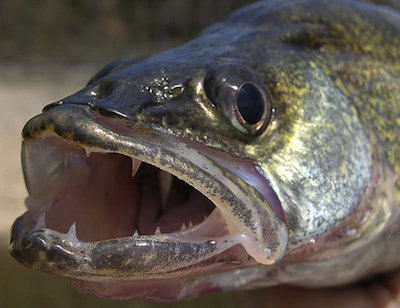
Not the prettiest face -- and a walleye like this caught in the lower Columbia River could be downright toxic if you ate it.

Not the prettiest face — and a walleye like this caught in the lower Columbia River could be downright toxic if you ate it.

PCBs, highly carcinogenic industrial chemicals, were banned in 1979 — demonstrating how persistent bio-accumulative toxins are, as they concentrate up the food chain rather than dispersing. (As Planet Waves reported Aug. 19, the U.S. Army Crops of Engineers finally confessed to its role in polluting the Columbia River through its dam construction.)

The sampled fish were obtained from local fishermen who planned to eat the fish in question.

“Fish advisories are not enough. We have to clean up the river,” said Lorri Epstein, Riverkeeper’s water quality director. “You can keep issuing advisories, but people are going to keep eating fish,” often for economic or cultural reasons.

GMO Soy Found in Infant Formula

Laboratory testing of infant formula purchased in Portland, Oregon, earlier this month revealed two products containing genetically modified soy engineered to withstand heavy pesticide spraying, reported The Statesman Journal Oct. 24. 

The tests, coordinated between The Center for Food Safety and retired EPA scientist and former professor at Oregon State University Dr. Ray Seidler, discovered the GMO soy in two infant formula brands: Similac Soy Isomil and Engamil Prosobee Powder Soy Infant Formula.

“Everything we know from the recent medical literature suggests we should be doing everything possible to reduce infant exposure to chemicals,” said Seidler.

Both products contained soy engineered for resistance to Monsanto’s glyphosate (the active ingredient in Roundup herbicide) and Bayer Crop Science’s glufosinate. Glufosinate has been found toxic to reproduction and was banned by the European Parliament in 2009.

Lawsuits Filed Against EPA’s Enlist Duo Herbicide

Several U.S. farmer and ecological groups are fighting back, via two lawsuits, against the EPA’s approval last week of Dow AgroScience’s latest herbicide concoction, Enlist Duo, Reuters reported Oct. 23. (See coverage last week by Planet Waves.)

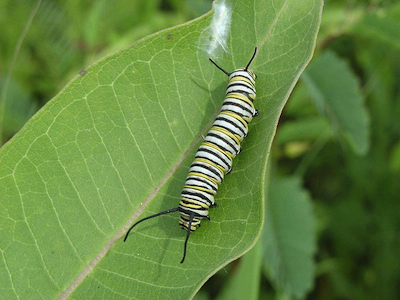
Monarch butterfly caterpillar feeding on milkweed. Like Roundup, Dow's Enlist Duo promises to further starve migrating monarchs -- to say nothing of what its toxic cocktail may do to human beings. Photo by the U.S. Fish and Wildlife Service.

Monarch butterfly caterpillar feeding on milkweed. Like Roundup, Dow’s Enlist Duo promises to further starve migrating monarchs — to say nothing of what its toxic cocktail may do to human beings. Photo by the U.S. Fish and Wildlife Service.

One lawsuit was filed Wednesday in the U.S. Court of Appeals for the Ninth Circuit in California, seeking to overturn the EPA’s regulatory consent. The groups argue that the EPA did not adequately assess the human health impacts of 2,4-D, a component of Enlist Duo, before green-lighting the herbicide on Oct. 15.

“This was a rubber stamp. They acted illegally in approving this,” said Andrew Kimbrell, an attorney with the Center for Food Safety and a plaintiff in the case.

A second lawsuit, filed Oct. 15 by the Natural Resources Defense Council in the Washington, D.C. Circuit court, alleges depletion of monarch butterfly populations primarily due to glyphosate, and claims the EPA underestimated the toxicity of 2,4-D for people.

“Because of its documented impacts on the thyroid, a critical organ for brain development, infants and children are at especially high risk from adverse impacts of 2,4-D exposure,” said Kristi Pullen, an NRDC staff scientist.

The two chemicals have been combined in Enlist Duo to battle the rise of so-called superweeds that have developed resistance to glyphosate. Milkweed, the only food that monarch butterfly larvae eat, has not developed resistance.

Note: you can listen to an Oct. 16 interview Posted by WWGF News to YouTube about
the EPA’s approval of Enlist Duo featuring Planet Waves’ own Carol Van Strum and Jay Feldman, executive director of Beyond Pesticides. The full interview includes other guests — or you can listen to a 12-minute excerpt in which Carol focuses on what individuals angry about the EPA’s decision can do.

…And a Breath of Fresh Air

For one 2-hour period last week, wind turbines out-produced nuclear plants in the U.K., the BBC reported Oct. 21. A combination of high winds and several offline nuclear reactors meant that wind made up 14.2% of all power generation and nuclear provided 13.2%.

Sheringham Shoal Offshore Wind Farm, England; the U.K. has the largest shallow-water offshore wind resource in the world. Photo by Harald Pettersen/Statoil via Wikimedia Commons license.

Sheringham Shoal Offshore Wind Farm, England; the U.K. has the largest shallow-water offshore wind resource in the world. Photo by Harald Pettersen/Statoil via Wikimedia Commons license.

Although the milestone was temporary and wind power is controversial amongst environmentalists, those who see nuclear’s long-term waste problem and potential for runaway disaster as bigger evils may take heart. However, until inexpensive storage technology is developed to make up for significant periods of negligible wind, the country will continue to rely heavily on nuclear and fossil fuels.

Not helping matters, notorious former U.K. environment secretary Owen Paterson is calling for a new generation of mini nuclear plants across the country — as though their meltdowns would be less radioactive.

Counters Jennifer Webber, spokeswoman for trade body RenewableUK, “Wind power is often used as a convenient whipping boy by political opponents and vested interests.” She adds, “All the while, it’s been quietly powering millions of homes across the U.K. and providing a robust response to its vocal detractors.”

Yours & truly,

Amanda Painter and the ECO editorial team

You may forward Planet Waves Monsanto Eco to your friends. They can sign up for this free environmental newsletter from Planet Waves. View this edition as a webpage.

Planet Waves Monsanto Eco (ISSN 1933-9135) is published each Tuesday evening in Kingston, New York by Planet Waves, Inc. Publisher: Eric Francis Coppolino. Editor: Amanda Painter. Business Manager: Chelsea Bottinelli. Web Developer: Anatoly Ryzhenko. Research, Writing and Editing: Planet Waves Monsanto Eco is produced by a team consisting of Amy Elliott, Carol van Strum, Len Wallick and Chad Woodward.

That Scorpio Eclipse and Mercury Stationing Direct

Thursday is an unusual day astrologically: the Sun, Moon and Venus all move into Scorpio, and meet up for a New Moon and a partial solar eclipse. Two days later, Mercury stations direct in Libra. So your life from now through the weekend may feel especially concentrated, but we’re all in this together — and it looks like some astrological factors will be easing the way.

Photo by Hal J. Cohen, taken at Amy Stacey Curtis' "Matter" installation.

Photo by Hal J. Cohen, taken at Amy Stacey Curtis‘ “Matter” installation, Oct. 4, 2014.

First, the basic facts: in a span of less than 12 hours on Oct. 23, the Sun, Moon and Venus will all leave Libra. The Sun enters Scorpio at 7:57 am EDT, the Moon and Venus enter Scorpio nearly simultaneously just minutes before and after 5 pm EDT, and the solar eclipse conjunct Venus happens just before 6 pm.

Scorpio is a water sign associated with intense emotions, deep eroticism, power, money and transformation — areas that make plenty of people squirm. Eclipses, in turn, are associated with periods of accelerated change: letting go of what you no longer need to make room for internal (and external) updates that will move you forward.

We tend to fear change just as intensely as we say we desire it, making eclipses more psychologically complex than perhaps they need to be.

A peek at the minor planets reveals something that may help us slide into Scorpio’s realm with minimal resistance — maybe even a sense of accomplishment.

Minor planet 1992 QB1 is in early Taurus, opposite where the Sun, Moon, Venus (and asteroid Pallas) are clustering. 1992 QB1 is associated with crossing thresholds into new phases of life and the people who assist the process. Midwives are a prime example of what Eric Francis likes to call a “thresholder.”

Continue reading

The (Mostly) Good News Issue

Last month the governments of Nepal and India, in cooperation with the World Wildlife Federation (WWF), released a report showing that tigers are using forested corridors to pass between protected areas across the boundary between the two countries, reported The Times of India. The report, titled “Tigers of the Trans-boundary Terai Arc Landscape,” details wild tigers and their prey as they move between Nepal and India.

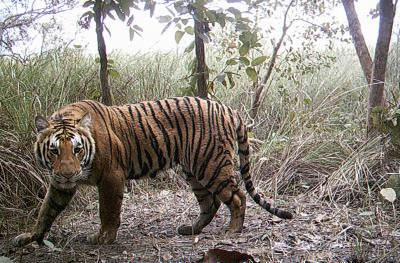
Bengal tiger (Panthera tigris tigris) caught on a camera trap in Nepal's Terai Arc Landscape as part of an estimate of tiger populations. Photo by the Government of Nepal.

Bengal tiger (Panthera tigris tigris) caught on a camera trap in Nepal’s Terai Arc Landscape as part of an estimate of tiger populations. Photo by the Government of Nepal.

Camera traps — cameras that have been set to automatically take a picture when a large animal moves by — documented 239 individual adult tigers across an area of more than 2,000 square miles, from November 2012 through June 2013. Called “landscape level conservation,” the corridors provide critical links between protected areas, since wildlife do not observe lines drawn on maps.

The study’s results were shared at the second Stocktaking Conference of The Global Tiger Recovery Program, hosted by Bangladesh and attended by 140 tiger experts from 20 countries. These tiger-range countries are involved in “TX2,” an initiative with the goal of doubling tiger populations by 2022.

Said Dr. Barney Long, director of WWF’s Species Conservation Program, “it shows that we must think and act beyond just islands of protected areas for tigers to truly thrive and have the space to double in number,” adding, “landscape level conservation can result in dramatic recoveries for wild tigers.”

Priorities for the next two years set at the Stocktaking Conference include: “professionalizing and investing in frontline staff, national tiger monitoring and assessment in all tiger habitats by 2016, improved transboundary collaboration and expanded capacity to tackle human-tiger conflict,” according to the WWF.

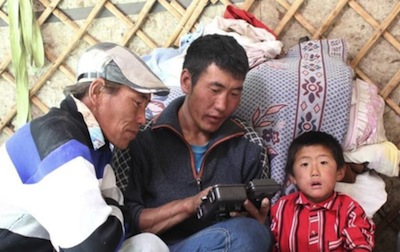
Local Mongolian citizens trained and equipped to collect basic data in their remote mountain home -- with perhaps a member of the next generation of 'citizen scientists'. Photo by WWF Mongolia.

Local Mongolian citizens trained and equipped to collect basic data in their remote mountain home — with perhaps a member of the next generation of ‘citizen scientists’. Photo by WWF Mongolia.


‘Citizen Scientists’ and Snow Leopard Conservation

In another ground-level conservation effort centered on big cats, WWF-Mongolia has trained eight local herders to conduct snow leopard surveys, and to use and maintain automated camera traps for monitoring the animals, the WWF reported in July.

The idea is that by involving the residents who know the area’s harsh mountains best, they not only become more deeply invested in protecting the rare cats, but the WWF can help develop methods to reduce livestock kills.

“We never hunt the snow leopard, even if they attack our livestock,” said Byambatsooj, a Mongolian herder and ‘citizen scientist’.

He adds, “We are very happy for the involvement of local herder communities in this action. We are all obliged to care for and safeguard the camera traps placed on the mountain.”

Far less is known about snow leopards than any other big cats, due to their elusive nature and inhospitable home.

Vultures Rebounding in India

South Asian vultures in India are making a comeback after facing extinction a decade ago, according to a study published in the journal Philosophical Transactions of the Royal Society B, reported Bird Life International Oct. 14.

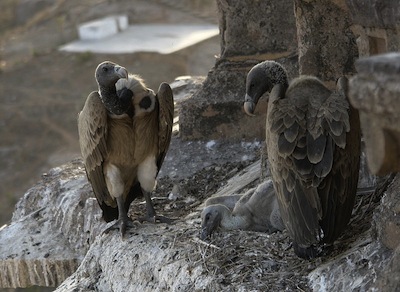
See? Vultures are people, too! A pair of South Asian vultures (Gyps indicus) care for a chick in their nest in Madhya Pradesh, India. Photo by Yann under Creative Commons license.

See? Vultures are people, too! A pair of South Asian vultures (Gyps indicus) care for a chick in their nest in Madhya Pradesh, India. Photo by Yann under Creative Commons license.

Since India banned the veterinary drug diclofenac in 2006, which is used to treat livestock, vulture populations are showing signs of recovery. Planet Waves reported last month on a related campaign to prevent similar decimation of vulture populations in Europe after diclofenac was approved for commercial use in Italy and Spain.

“We’ve come so far and this is turning into one of the biggest conservation success stories ever,” said Dr. Toby Galligan, conservation scientist and co-author of the study.

While experts claim that six percent of livestock carcasses are still contaminated with the drug, the number of contaminated carcasses has been reduced by half since the ban.

The Bad News: EPA Approves Dow’s Enlist Duo Herbicide

Following the approval of Dow AgroScience’s GMO corn and soybeans last month by the U.S. Department of Agriculture, Reuters reported Oct. 15 that the Environmental Protection Agency (EPA) has given final approval for Dow’s Enlist Duo herbicide (containing the Agent Orange ingredient 2,4-D, and glyphosate), which the new GMO crops were engineered to resist. (See Sept. 30 coverage by Planet Waves here.)

The EPA has approved Dow's latest chemical assault weapon for use against so-called 'superweeds' that have grown resistant to 'regular' poisons. Agent Orange did not get left behind after the Vietnam War; it's now heading for dinner plates.

The EPA has approved Dow’s latest chemical assault weapon for use against so-called ‘superweeds’ that have grown resistant to ‘regular’ poisons. Agent Orange did not get left behind after the Vietnam War; it’s now heading for dinner plates.

The EPA’s approval comes with new restrictions in an attempt to prevent weed resistance — including a paltry 30-foot “no-spray” buffer zone, banning use when wind speeds exceed 15 mph, and limiting its use to ground applications only.

The restrictions, however, miss some important points. Planet Waves researcher Carol Van Strum points out that the EPA approved this combination without any testing for the effects or synergistic impacts of the two chemicals combined (and no testing of the false-named ‘inert’ ingredients, which can be even more toxic than the ‘active’ ones and also react synergistically with them and with each other).

‘Inert’ does not mean chemically inert, but rather that a chemical does not act toward the stated purpose of the ‘active’ ingredients.

It’s also worth noting that, as Van Strum writes, “the EPA’s decision is based on a risk assessment that assumes that a certain number of deaths — adults and children — are ‘negligible’ and therefore ‘acceptable.’ Ask yourself whether your own cancer or your own child’s birth defects are ‘negligible.'”

Or, as Andrew Kimbrell, executive director for Center for Food Safety, put it: “EPA has turned its back on those it purports to protect — the American people and our environment.”

China Announces Logging Ban in Main State-Owned Forests

China has decided to try banning commercial logging in state-owned forests in the province of Heilongjiang, which borders Russia and provides much of the country’s timber, The Guardian reported Oct. 17. The move is designed to help timber supplies recover and to usher in better forest management practices.

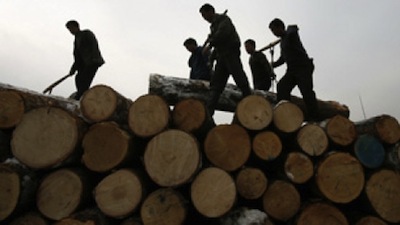
Workers pile logs at a lumber market in northeast China's Liaoning province in 2007. No word yet on whether the ban will unintentionally increase the country’s imports of illegally logged timber. AP photo.

Workers pile logs at a lumber market in northeast China’s Liaoning province in 2007. No word yet on whether the ban will unintentionally increase the country’s imports of illegally logged timber. AP photo.

Two companies manage 18.45 million hectares (nearly 45.6 million acres) of forests in Heilongjiang, covering 39% of the entire province.

Some laid-off loggers “will become forest rangers and learn how to manage forests,” said Sheng Weitong, a forestry expert and former advisor to China’s cabinet-level state council, to chinadialogue.

Hou Yuanzhao, a researcher at the Chinese Academy of Forestry, added that, “A halt here means an end to the way China has been utilizing forestry resources since 1949.”

Heilongjiang’s forests help stabilize the ecology of northeastern China, a primary producer of rice — meaning that recovery of the region’s forests is key to far-reaching facets of China’s economy and overall health. Key to the planet’s health, however, will be China’s ability to curb its appetite for wood. China’s domestic timber industry accounts for only 40% of its demand for lumber — both to satisfy the tastes of its growing middle class and the demands of foreign furniture and construction companies.

Burkina Faso’s ‘Re-Greening’ Success

Farmers in the landlocked West African nation of Burkina Faso have “achieved striking progress” in reclaiming land formerly considered too infertile, according to Bloomberg News Oct. 9. Formerly known as Upper Volta, the vast majority of people in Burkina Faso are employed in agriculture.

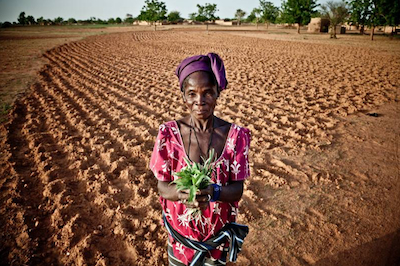
In 2009, Burkina Faso adopted one of the most innovative land laws at that point in West Africa. Photo by Pablo Tosco/Oxfam.

In 2009, Burkina Faso adopted one of the most innovative land laws at that point in West Africa. Photo by Pablo Tosco/Oxfam.

In a September 2014 case study published by Britain’s Overseas Development Institute, lead author Amanda Lenhardt noted how local dissemination of “a range of simple but sustainable agricultural techniques” for conserving water and restoration of arable land has not only produced enough additional food to feed its population but also “could hold key lessons for other countries.”

This is far from an overnight success; sustainable farming methods have been encouraged since the 1970s, both by the government and non-governmental organizations, aided by strong social and community networks, according to the study’s authors.

Although more still needs to be done, the increased food crops have “enhanced food security for around 500,000 people.” If one of Africa’s poorest countries can “re-green” itself, what is taking the rest of the world so long?

Yours & truly,

Amanda Painter and the ECO editorial team

You may forward Planet Waves Monsanto Eco to your friends. They can sign up for this free environmental newsletter from Planet Waves. View this edition as a webpage.

Planet Waves Monsanto Eco (ISSN 1933-9135) is published each Tuesday evening in Kingston, New York by Planet Waves, Inc. Publisher: Eric Francis Coppolino. Editor: Amanda Painter. Business Manager: Chelsea Bottinelli. Web Developer: Anatoly Ryzhenko. Research, Writing and Editing: Planet Waves Monsanto Eco is produced by a team consisting of Amy Elliott, Carol van Strum, Len Wallick and Chad Woodward.

Mercury-Sun, Mercury-Venus in Libra: Insights and Art

By Amanda Painter

Thursday, Oct. 16, Mercury reaches the midpoint of its current retrograde, heralded by its conjunction to the Sun in late Libra (exact at 4:40 pm EDT / 20:40 UT). So if you’ve been finding communication and technical issues to be challenging, take heart that the retrograde is halfway over.

Given that this Sun-Mercury conjunction also coincides with the approximate midpoint between eclipses, continue to stay open to whatever insights have been coming into view, especially about past patterns of relating to others. No matter how uncomfortable the surfacing of these insights — I realize that some people are dealing with a lot of challenging material right now — they are valuable; perhaps even more so than usual for their potential to help you make new choices and set new patterns going forward.

Almost simultaneously with Sun-Mercury, Mercury also makes a conjunction to Venus in Libra (exact tomorrow, Oct. 17, at 1:55 pm EDT / 17:55 UT). Mercury-Venus offers “refinement of consciousness,” according to Isabel Hickey — though with Mercury retrograde, that may apply more to your inner self-perceptions.

Mercury-Venus can lend optimism; but Mercury conjunct the Sun can indicate a blind spot in understanding, or a lack of awareness of one’s biases. So, you might find that optimism clearer-sighted as Mercury and the Sun separate.

Continue reading