Category Archives: Welcome

Weekend Tarot Reading — Sunday, May 24, 2015

By Sarah Taylor

The final card in last Monday’s reading — the Two of Swords — is the first card this week. What I take from this is that that sense of moving into new territory forms part of the foreground of the story being woven by all three cards present today.

Let me go back to what I wrote last week about the Two of Swords:

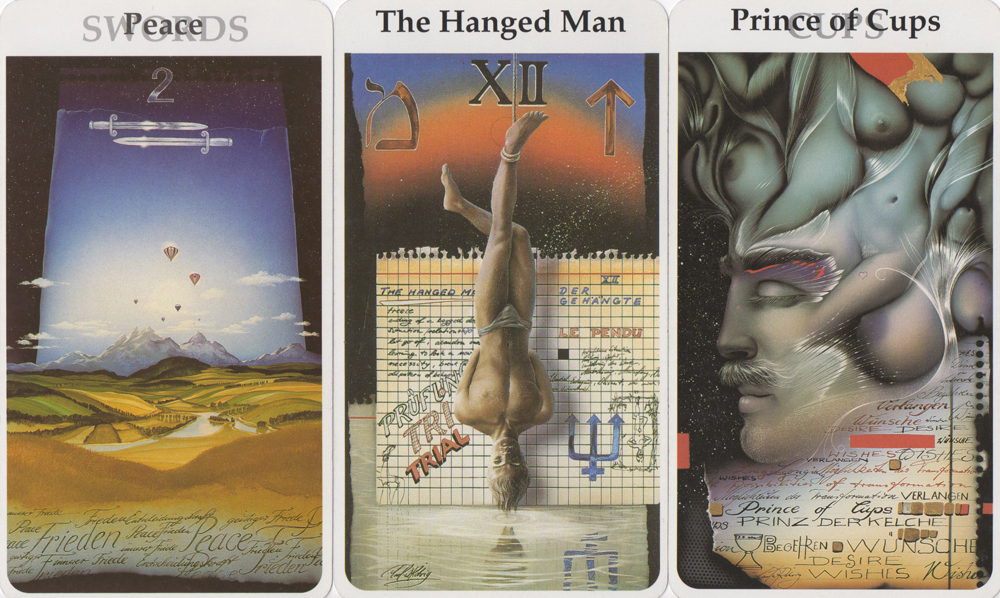
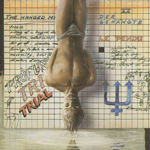
two_swords_hanged_man_prince_cups_rohrig_sm

Two of Swords, The Hanged Man, Prince of Cups from The Röhrig Tarot deck, created by Carl-W. Röhrig. Click on the image for a larger version.

“The Two of Swords — Peace — is another card that speaks of transition: the creation of a through-point that clears the skies enough that you can journey to new land. And it looks like the journey itself could be one beautiful adventure, if you are open to moving in a way that you may not be used to, open to living with a lot more (head) space than you may be used to.”

I believe that journey is either taking place, or is imminent. The reason I don’t believe it has taken place already is because of the position of The Hanged Man in the centre — and when I write “position” I don’t simply mean that he is suspended: I am also looking at his feet and where they are pointing as he sinks his head into Neptunian waters.

The Hanged Man is indeed associated with Neptune — a planet that is currently very active in our astrology. Both the card and Neptune work well together in terms of their meaning. The Hanged Man describes the experience of not only being suspended with little choice as to where to go, but also of having entered a state of consciousness where nothing feels ‘right-side-up’ anymore. There is a surreal edge — perhaps more than an edge — to The Hanged Man when the archetype brushes up against and into your life. Things can feel a little weird, out of whack, apt to behave in ways that are less than predictable.

The reason for this is the water into which The Hanged Man’s hair is dipping. He is getting to experience the emerging unconscious.

Problem is, he didn’t want to go there himself, so the perfect circumstances were created so that he had little choice in the matter. It’s as if one minute he was innocently walking along a path next to a pond, and the next — whoosh! — he stepped into a looped rope and it swung him up into a tree and lowered him toward the water, head-first.

The kicker in all this? He is you, and you helped to create those circumstances yourself. So, you might have to swing there angrily for a while, feeling the unfairness of it all. Until the point comes where you can choose to give up the struggle and relax into your surroundings. Take a little dip into those mirror-like waters that give away little yet hold so much. And don’t worry: you can still breathe. It’s just that the air here is going to feel thicker, full as it is with images and dreams and fleeting impressions and sensations that feel more at home in a David Lynch movie than they do on the film set of your own life.

But what David Lynch movies do so well is that they are celluloid expressions of the unconscious. They are at once disturbing and hauntingly familiar; they unsettle and yet feel like home — but a part of home you don’t tend to visit much; a locked room.

The Hanged Man gives you a key to that lock. You get to peek your head round the door and to step in as your head lowers further, and further, towards the rippling pool.

Now look at The Hanged Man again. He has already reached that state of surrender. His eyes are half-closed, suggestive of meditation, and he is still. Still, quiet, so that he can meet his unconscious on its terms, not his.

Moreover, his left foot seems to be gesturing to the card on the left, the Two of Swords, while the toes on his right foot are turned towards the final card, the Prince of Cups. Two very different cards. He is suspended between both.

The Prince of Cups seems to be deep in meditation, too — except here we can see exactly what his focus is on. We are privy to his feelings and his desires. Breasts, cocks, vulvas, curves fill his inner vision as he faces towards The Hanged Man.

He is The Hanged Man. Or an aspect of him, as the twelfth card in the Cups suit to The Hanged Man’s “12”. As are you, and your desires, and your draw towards the sensual, the sexual. In the past, I have referred to the Prince of Cups as one who “thinks about love.” This he is very much doing; and it is a particular form of love. Eros.

But it is time to stop thinking it, perhaps, and to start knowing it. And so the Prince of Cups and his concomitant “possibilities for transformation” are dipped into the transforming waters of The Hanged Man — both Hanged Man and Prince in suspended animation.

All the while, the Two of Swords holds its presence at left, an equal player in the current circumstances. There seems to be an alchemy between all three cards: the Prince shifts through the christening of The Hanged Man and into “a lot more head space.” With it, there is release from suspension, and you take what you have gathered into yourself for the onward journey.

A journey you would not have known were possible if you had not remained still enough to open to the deep.

Astrology/Elemental correspondences: Two of Swords (Moon in Libra), The Hanged Man (Neptune), Prince of Cups (the airy aspect of water/Scorpio or Pisces)

If you want to experiment with tarot cards and don’t have any, we provide a free tarot spread generator using the Celtic Wings spread, which is based on the traditional Celtic Cross spread. This article explains how to use the spread.

Sleep Better & Have More Sex. Fight the Blue Light!

Note: If you’ve never poked around on Betty Dodson’s website, which she runs with business partner Carlin Ross, you’re in for a treat. As you might imagine, they cover the gamut of sex and sexuality topics, and Betty regularly answers reader letters in her blog posts. Eric Amaranth is her long-time protoge. — Amanda P.

By Eric Amaranth for DodsonandRoss.com

I’ve been wearing Gunnar glasses for over a year now to solve the eye strain problem caused by computer/laptop monitor light. They work very well. My wife wears them as well as some of her co-workers after she told them. A few months ago, something prompted me to do further research into how computer/laptop monitor light interferes with sleep.

Eric Amaranth

Eric Amaranth

What this has to do with sex is, the less sleep and also quality of sleep you have, the more your sex drive suffers plus other things like falling asleep in the middle of sex, which some people get mad at their partners for and take personally.

I saw that Gunnar glasses have a yellow tint and wondered why. I called them to ask and they said it was to act as a blue light filter to reduce the amount of blue light entering the eye which contributes to eye strain. I digged some more and found this program: F.lux

It’s freeware, virus-free. It gives the user the ability to lower their blue light output on computer monitors. I’ve been using it for a few months now and noticed that I was nodding off earlier in the evening than I was before and I was going to sleep faster when I did get to bed. It was also making the screen even less jarring to my eyes even with the glasses.

Some tips on how to use F.lux. Once it’s installed, go to your running programs box in the lower right (on windows) and click the yellow and grey yin-yang symbol. That’s the F.lux icon. Go to Settings and click the button to set your location so that the program will switch on at sunset. There is another button on the main menu with three horizontal lines. click that and it opens another options menu. Hover over “Lighting At Night” and you will see six or seven lighting levels. Three from the bottom up are active, the others above them are greyed-out. At the top of the list is a button to expand the colors. Click that. You’ll be promted to restart your computer. Do so. It won’t install a virus. Come back to that Lighting at Night option and you’ll find that you can activate any of the color options.

The default is “3400k Halogen”. You’ll see your screen go more yellow under that mode. I have mine set on “Candle” which brings the blue down even more. I find that works the best for me.

I did more poking around because I wanted the same filtering program for my iPhone because a cell’s full color screen puts out blue light. If you use your phone before bed like many of us do, you’ll undo all the setup time your f.lux program did. At this time, there isn’t a good app for a phone.

I found www.LowBlueLights.com. They make and sell thin vinyl transparent yellow filters that fit over the face of your smartphone and filter out the blue light. This website sells other blue light eliminating products like their custom orange glasses to be worn while watching TV or before bed wearing them around the house. There are many LED and white light producing bulbs that we use, but they aren’t good for us either. LowBlueLights.com also offers a yellow light bulb for your house. I suggest getting that or shop on a light bulbs-only website for smaller versions that will fit your lamp on your nightstand. The yellow lights in lamps at night have been doing even more to help my sleep.

I thought my mentor Betty [Dodson] would appreciate trying out F.lux. It was a big hit! She began to nod off at 12:30am the night she was watching movies on her computer. Normally, she’s up till 2:30 or 3am, she said. Not anymore. I was surprised at how quickly it worked for her. I went out to a light bulb shop here in NYC and bought some yellow blubs and installed them in a few lamps.

The reason all this works is because melatonin production by the pineal gland begins at night as part of our internal clock. If we’re up working or playing on a monitor or smartphone, (or have other white light producers in our home or business lighting, our brain takes in the blue light through the eye and is confused because blue light means daylight, but according to your clock it’s after sunset. Your brain tries to do two things at once: prepare you for sleep and wake you up.

The prep for sleep usually wins out, but like I indicated before, the sleep is not as deep and trouble getting to sleep often results. For people who drink too much caffeine (which is also a sex drive inhibitor for many women and some men) the blue light with that makes sleeping even more difficult.

I recently talked to a client who said she sleeps poorly and when she can’t get to sleep (after doing a ton of computer work prior to bed), she will stay up and get back on the computer to entertain herself. Feeding the problem even more.

I take it further actually and use candlelight as I’m getting ready for bed. It’s fun, old fashioned, and I feel the difference when I try to keep the blazing bright bathroom light on during the shower and toothbrushing vs the candle glow.

We have enough things making a hot sex life challenging. We don’t need the damn lights and gadgets sabotaging it too.


Eric Amaranth is a sex life coach covering topics ranging from solo and partnered women’s and men’s sexuality, first time orgasm for women, orgasm during intercourse, premature ejaculation, and much more. He is the ten year protege of pioneer sex coach, Betty Dodson, Ph.D.

Deep Roots

By Michael Mayes

I’m not the ‘enemy’ in the eyes of the police. I’m white, ‘middle class’. Hello white privilege. So, why have I always had a chip on my shoulder towards authority? I have never been arrested, and even got a couple ‘get out of jail free’ cards from cops back in the day. Yet my perception of authority has endured extreme polarization.

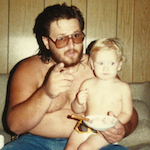
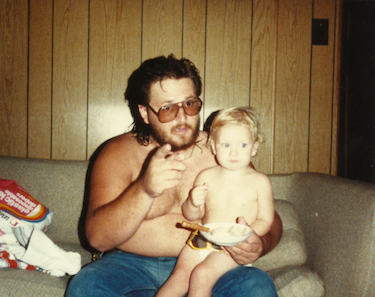
The author on his Outlaw dad's knee, on their infamous trip to visit Harry.

The author on his Outlaw dad’s knee, on their infamous trip to Florida to visit Grandpa Harry.

In a dream world, police would be perfectly trained, Freddy Gray incidents would not exist, and our cops would not be at war with certain citizens. I’m not a ‘criminal’, but I am the first male on my dad’s side in two generations (possibly three) to not be one.

My great grandpa was definitely a bootlegger at one point in his life, evidenced by him losing a scholarship to Cumberland College for bootlegging. Grandpa Harry did two years for robbing a savings & loan. My dad was in the Louisville Outlaws motorcycle gang; think motorcycles, guns and drugs. Dad told me recently that the trip to Florida to see grandpa Harry when I was three was actually because he was hiding from the cops.

I was born in 1981, but dad didn’t straighten his life out until about ’87, when I saw him on the news in a bright-orange jail suit. He got busted with a trunk full of guns coming back from Virginia. What really tops this all off is that my mom’s dad was a cop. He and I are not close; not because he was a cop, but because he wasn’t all that present in mom’s life.

Still, that’s a lot of recent ancestral baggage, which has called for some self-investigation while writing this piece. It gave me the advantage of seeing the issue from both sides. I know there are some bad cops, and generally I’ve used that knowledge to fuel my distaste for them over the years. However, I’m not an anarchist, I understand the need for authority. I’m now old enough and wise enough to know that to hate the police is not a fair or healthy outlook. We need the police. I’ve called on them more than a few times myself. They’ve never done me harm.

So, why does my blood boil when they abuse their authority? My ancestry. Also, I’m a pot-smoking artist/skateboarder who loves punk, reggae, hip-hop music — and, ultimately, police brutality is just plain wrong.

How do we stop it? Could better training stem excessive force? I decided to interview an officer from the Louisville Metro Police Department. He’s currently working at a high school where I was a substitute teacher, one of the ‘worst’ high schools in Louisville, where a great number of kids are considered ‘at-risk’.

To be clear, he is not a security guard for the school. He handles deeper issues with students who might be homeless, victims of abuse, or whose guardians are extremely bad influences. Before this job, he worked the beat during the graveyard shift in the West End and Portland neighborhoods in Louisville. Those are the areas with the most housing projects, and highest crime rates. The Portland neighborhood was my dad’s old stomping grounds. You can see the big skull & crossbones (engine pistons) on the face of the Louisville Outlaws clubhouse as you enter the West End coming down Market Street.

I sat down with Officer Bob*, in a glass-walled conference room next to the school’s main office. I was a little nervous because it was my first interview. I think he was a little confused as to what astrology had to do with police training when I told him Planet Waves was an astrology website. That’s what I get for calling it an “astrology website.” Lesson learned.

After asking about his work history with the force, I began by mentioning the Freddie Gray video, which had just been released one day prior. I asked if he had any opinion or insight as to why this kept on happening. He said he couldn’t speak for another officer, or officers’, actions. Fair enough.

I asked if de-escalation and risk-assessment were part of his training. He explained that, yes, he was given “scenarios” where he practiced using de-escalation, and risk-assessment techniques to avoid force. He added, “but there’s only so much they can teach you.” Knowing the neighborhoods where he patrolled for seven years, I believed him. Still, I wanted to know if there were any instances in his career when he felt like he would have benefited from better training. He said no, but he did think that better training would help.

After the interview, I felt a wee bit of healing in my ancestral rift with authority, but not much. I still felt fairly shitty about cops in general, convinced the officer I interviewed was a rare breed. The Freddie Gray video didn’t help. I had no idea what was coming, but I felt the wave building inside and all around me.

There are good cops out there, I knew that much. I needed to know there were a bunch of good cops grouped together. I needed to know that some police department, somewhere, knew how to train their officers. I burned to know that there was an alternative to the antagonistic, occupying forces that, by way of systemic and/or blatant racism, were making the lives of blacks all across this nation a living hell.

Also, I could not overlook the obvious racial element underlying much of this issue. I’ve been seeing this since Rodney King. I was admittedly scared when I saw the LA riots on the news as a boy, but that was before I could see behind the veil of the media. This issue is bigger than police training and brutality.

Still, I Googled “progressive police departments,” and came upon a jewel of an article in The Atlantic. In it, Seth Stoughton, an ex-cop turned scholar, pointed out that although American cops are among the best trained in the world, “what they’re trained to do is part of the problem … Officers aren’t just told about the risk they face. They are shown painfully vivid, heart-wrenching dash-cam footage of officers being beaten, disarmed, or gunned down after a moment of inattention or hesitation.”

It’s easy to imagine how that trains officers to shoot first, and ask questions later.

However, as the article points out, there is hope. Richmond, California’s, police department is getting results by way of better training. Stoughton writes, “Police agencies that have emphasized de-escalation over assertive policing, such as Richmond, California, have seen a substantial decrease in officer uses of force, including lethal force, without seeing an increase in officer fatalities (there is no such data on assaults).”

Obviously, it’s better to try to talk a person out of trouble than to provoke them into it. With at least one example for less enlightened police departments to follow, I had hope. Better training is a step in the right direction; but other police forces need to be aware it exists. And the citizens and officials of the communities they police need to vocally and actively push for this kind of change. Of course, there is no panacea: no amount of scenario training, no fail-proof de-escalation chart, no algorithm that can fix such systemic issues by itself. A complex web of factors contributes to the current state of police culture in the U.S.

As for my beef with authority, it’s been cut down to a digestible portion. As of completing the first draft of this piece (May 9), the Sun is a couple days past an exact conjunction with my midheaven, and will be exactly conjunct my natal Chiron in a matter of minutes. My wounded perception of authority is healing. Officer Bob, if you’re reading this, that’s how astrology relates to it all.

Responding to the issue of police brutality with some investigation forced me to be honest with myself. I can finally empathize with the police, even while the war rages on outside — but I’ll always stand firm against abuses of authority. Yet I can’t help but wonder, given my dad and grandpa’s run-ins with the police: if they weren’t white would I even be here?

*not his real name

Dear Madame Zolonga: My Rising Sign Rubs Me Wrong

Dear Madame Zolonga,

What if I don’t feel like my Rising Sign? I’ve read about this in a few articles, and honestly don’t feel like the Sagittarius rising I’m supposed to be. For one, I’m not a bit horsey, and for another, I’d rather spend the day at home with my pottery wheel than trekking across the Himalayas. I’m not into roughing it. So what’s up?

Not Rosey with my Rising

Dear Rosey,

This may not be A Thing any longer, but back in the day brides everywhere were gifted with cookbooks as they set up their first home with Lovey. We can assume the primary reason was so that Lovey and Co. would not starve that first year from too many pots of burnt beans.

The implication, of course, was that young couples and folks just starting out need step-by-step advice for assembling food that should, at a minimum, end up palatable on the plate. Refinements like presentation could come around Year 3, after they’d mastered the basics of basting.

And this is how most basic astrology books work, as well. They’re set up so that, at a minimum, you grasp a few facts and don’t burn your beans. In astro-lingo we call them ‘cookbooks’ because dozens of ingredients (the planets and signs, etc.) are separated out for you. Some cookbooks even show you how to blend flavors. Like in real cooking, no one becomes a 5-star Michelin-rated chef from two classes on knife work. Right? Neither will anyone fully comprehend astrology from a basic cookbook. But food, like nature, is a universal experience and benefits from a little playfulness. So play with your food. Or planets.

You say you don’t feel like the descriptions of your Rising Sign. Let’s play with that idea. You are, firstly, yourself and not a description in a book. How, then, do you describe yourself? Why not look to yourself, first? Make a few simple lists. How do you like to greet others? What do you surround yourself with that you feel represents you? What colors dominate your closet and shelves? And my favorite — what’s usually your first instinct when you wake in the morning? What’s on your mind?

Some of this will correspond with the cookbook definition. What about the parts that don’t? This is where planetary rulerships help. All zodiacal signs have ‘rulers’ or ambassador planets. For Sagittarius rising, your rising sign’s ruling planet is Jupiter.

If Jupiter sits in your 4th house, which represents home, you may find that you express your rising sign at home and in the style of the sign of your Jupiter. Why? Because that’s where your Jupiter is doing business. The rising sign always wants to know where its ruling planet is working. It wants to express itself through that planet.

In your case, the sign on the cusp of your 4th house is likely Pisces — a creative sign at ease with molding and shaping materials from one form into another. Do you have Jupiter in Pisces? That sounds like pottery to me. You may feel the power of Pisces as easily as the strength of Sagittarius.

Go back and read Pisces rising and Jupiter in Pisces as well in your astrology ‘cookbook’. Play with those ideas. I find when I ask about this, clients say acquaintances often assume they are the sign where their rising sign’s ruling planet resides. Do your casual acquaintances peg you for a Pisces? Possibly!

Consider your question like this. Many of us who moved away from home and set up a life elsewhere take on the trappings and attitude of our adopted new digs. We adapt — or don’t! You may be hustling as a hotshot in NYC, loathe to admit you’re from Kenosha. Planets work like that, too. If you don’t ‘feel’ like the description of your rising sign, then go find its ruling planet and see what’s happening there! Is it comfortable where it’s working? Are the surroundings friendly or fierce?

So many questions! I could ask more. But you’ve got enough here to start your exploration. Don’t be held back by a simple formula. Get a rise outta your rising sign: crack open that astro-cookbook and play with your planets!

Yours experimentally,

— Madame Z

Taurus New Moon into Mercury Retrograde

Note to Readers: on Thursday I published a weekly horoscope that covers Mercury retrograde for each of the 12 signs. All readers may access that here. Below each sign is a five-minute preview of my audio Mercury retrograde reading.

Image by Marina Morales.

Image by Marina Morales.

Tonight is the Taurus New Moon. It snuck up on us in the midst of much other astrology. The exact Moon to Sun conjunction in Taurus happens Monday morning at 12:13:13 am EDT (4:13:13 UTC).

That will be followed by Mercury stationing retrograde in Gemini less than 24 hours later, Monday at 9:49 pm EDT (Tuesday at 01:49 UTC). The two events are happening close enough to be considered one meta event.

The main difference between the charts is that for the Taurus New Moon tonight, the Moon is obviously in Taurus. For Mercury stationing retrograde, the Moon is conjunct Mercury in Gemini, though the Moon’s emphasis speaks more of similarity than difference.

It’s as if the Moon bridges the two events. In the Mercury retrograde chart, for example, the Moon is in a very close square aspect to Neptune, emphasizing the point that perception requires a rational analysis, fact-checking and other forms of verification.

The message of Mercury retrograde is: don’t take anything for granted. Confirm all arrangements till you’re satisfied that everyone has a grip. Do not assume, especially about how people feel, including how you feel. Feelings will change as aspects develop.

Continue reading

Spinsters and Crones…or the Re-emergence of the Healing Wise Women of the 21st Century

Note: Amanda Moreno expects to be back with her column next weekend. In the meantime, Here’s the first part of another of our Featured Articles from Cosmophilia: You Belong Here. You may read the piece in its entirety here; comments are welcome below and on the Cosmophilia website. — Amanda P.

by Elizabeth Routledge

I turned fifty in 2012, some months before the prophecies for ‘The End of The World’ (as we knew it), were due to kick in. Being the hopeful type I felt excited at the prospect of a paradigm shift and my part in it. The world and mainstream media, however, painted a different picture: as a woman of ‘a certain age’ I was approaching invisibility and impending retirement.

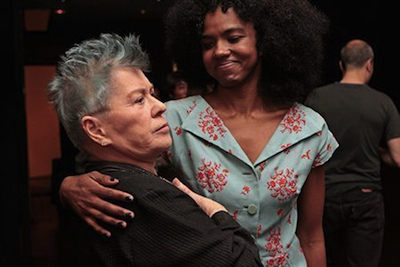
Photo by Eric Francis

Betty Dodson and younger friend; Photo by Eric Francis

The endless rampant consumerism, ecological suicide and perpetual war seemed to go on its not-so-merry way.

In a world that worships youth and the next new thing I could succumb to feeling irrelevant. Yet I keep coming across vital older and elderly women who are wise, inspiring and contributing positively to the story of our world.

One, numerologist Gail Minogue, claims that:

offstage, waiting for the spotlight, are the middle-aged women…Everything is cyclical. We have not visited the importance of middle-aged women for about 200 years so we have little reference to this phenomena. This phase of power for this group will last until 2044 (starting 2024) so it is a long run and will have women in their 40s, 50s, 60s and 70s running the financial systems, the political systems, the social and cultural systems and the general well-being of our society.

If she is right, then women need to get ready to (re)claim power and authority, not as monstrous ‘Maggie Thatchers’ (i.e., taking on ‘masculine’ attributes) but as leaders, curators, storytellers, filmmakers, CEOs, mentors, elders and paradigm-bridgers who can inspire and nurture future generations.

The Good Book says that without vision the people perish, but the current vision of parasitic corporations, sociopathic puppeteer politicians, mindless military/police, and a populace without privacy or freedom is not one that serves humanity, but a disparate elite who fail to realize that we are all connected. These visionaries may well be the Women of Chiron, the wounded healers who have lived forgiveness and been transformed by pain.

There are too many women who lose their vision and sense of purpose as they age. I know many who would have once been called ‘spinsters’, some desiring to be in a relationship, others glad not to be, but all questioning their place in the world. We need to be reminded of how much we have to offer, and not be seduced by marketing that would have us compare and compete and compel us to carve up our faces into the neotenous masks of plastic surgery. It is a futile resistance. The media constantly exacerbates our fears of being discarded because we are no longer childbearing, no longer desirable, and therefore of very little value.

But we have much to offer. We do belong here. We must begin to recognize the beauty of the lines and scars that tell our stories. We must begin again to value life experience, wisdom and character. We must champion the elders and their wisdom — before it is too late.

The older woman particularly needs to think bigger and bolder, to dream again, and place a new value on who she is and why she is here. “… The future belongs to a very different kind of person with a very different kind of mind — creators and empathizers, pattern recognizers … These people — artists, inventors, designers, storytellers, caregivers, consolers, big-picture thinkers … The Conceptual Age,” writes Daniel Pink, in A Whole New Mind: Why Right-Brainers Will Rule The Future.

Surely that includes the experienced female, humbled by life, yet full of empathy and understanding?

Continue reading here.

Tarot Feature :: Of the Jackie Stallone Psychic Circle

Sarah Taylor’s Weekend Tarot will be posted Monday.

Everyone’s seen ads for those Psychic Hotlines on TV. They seem really weird, with a woman, sitting in a room full of candles and wearing a black gown, wisely advising a client on the phone. Have you ever called one? Would you ever? I wouldn’t — but I once worked for one.
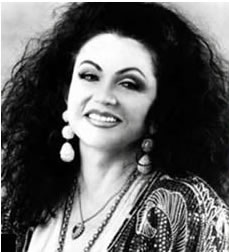
Jackie Stallone in her more attractive days, pre-plastic surgery.

Jackie Stallone in her more attractive days, pre-plastic surgery.

When I reached my limit on writing articles about environmental poisoning, it was late autumn of 1994. A few months earlier, I had answered a Village Voice classified ad for telephone Tarot-card operators, sent in my resume, passed the “reading test,” was hired. But it seemed like a really weird thing to do. After a few weeks, I forgot that I even had the pass-codes to connect my phone to the computer. But after months of refreshing my Tarot skills and studying astrology, I felt like I could at least try, and I needed something else to do. So I dialed the codes into the telephone and activated my account.

Half an hour later, the phone rang.

First I heard a kind of audio trademark, a little puff of music followed by someone saying “Jackie Stallone Psychic Circle.” Then the caller said they wanted a Tarot card reading. So I read the cards. It took about five minutes, and the person seemed happy and the reading seemed to help. I hung up, and then a little while later, the phone rang again, and it was another absolutely random person reaching my little apartment in the woods of Rosendale, New York.

Talking to absolute strangers who had no idea who they were talking to was odd enough. I knew that I could read Tarot cards, so I trusted myself to do it. The issue I had was that readings cost the caller $3.95 per minute. My pay was a 10% commission – actually, 35 cents per minute, around $21 per hour if I worked continuously, which seemed unlikely. I was quite uncomfortable about the price of the readings; a 15-minute reading cost the client nearly $60, which seemed outrageous, particularly compared to Flo Higgins getting what already seemed like an exorbitant $40 an hour. After taking a few calls, I could tell that the clientele consisted basically of poor people being lured in by television ads late at night.

The next day I called up the company and talked to the manager, a guy named Virgil, who explained how everything worked. What became obvious was that when a client dialed the phone, somebody somewhere was going to answer and provide them with some kind of advice. So, I decided that it might as well be somebody who could actually do the work honestly — that is, without playing tricks such as frightening people to make the calls longer.

I got along well with the manager, who happened to be a Pisces, something we had in common, and in exchange for being willing to work all night, I got my priority rating bumped up to the highest level. Now when I logged on, the calls came through quickly, sometimes with just a few moments between hanging up and the phone ringing again.

Suddenly I was making $400 a week, a lot more than I was making writing about PCBs, which seemed to run at a loss most of the time. I could afford all the astrology books and charts I wanted. Plus, not having to think about PCBs, dioxins and toxic dorms was an incredible relief.

I spent many nights working like this, studying astrology in the slow moments, and putting to work what I was learning with the constant stream of new clients who were seeking advice.

One night, I got confirmation that I had made the right choice in taking the job. The phone rang, and it was a very young woman, probably under the legal age to be calling. She was shaken up, and said she’d just gotten off the phone with another operator from my company who told her that she was pregnant with a space alien’s child.

This might seem ridiculous, but I had to take it seriously. I was confronted with a scared person whose faith had been abused by an authority she trusted. And when many people seek advice from an oracle like Tarot or astrology, they may, consciously or not, consider it to be coming from a “divine” source, giving it all the more power.

I asked her basic questions: had she had sex with anyone lately? No. Did she remember any kind of an “alien abduction,” even in a dream? No. With those facts out of the way, I read her cards. She was not frantic, just really nervous. She was willing to reason through the situation.

It was not difficult to straighten out. For one thing, her own intuition had told her to pick up the phone and call for a second opinion, so she was seeking reassurance of what she probably knew. I saw no suggestion of pregnancy in her cards, much less from some extraterrestrial being. In fact, I saw nothing amiss. I told her this, plain and professional. She seemed reassured, I told her nobody had the right to scare her like that and that I would report it to the phone line manager, who I knew — and the session ended.

This was the first in the genre of “read the cards again because somebody screwed up” sessions. Basically, any prediction that any caller did not like was a screw-up. The prediction would need to be replaced with the idea that we have the power to choose, and the cards can help us see the options. This is good reasoning, and even people who call insisting to be told the future can be reassured by this line of thought.

Many intense situations happened those long nights and early mornings. Once a woman in her 20s called, saying she was facing surgery for breast cancer. She was deeply shaken and fearing for her life, and facing the grief of losing her breasts at a young age. We worked with the cards for a few moments, but mostly we talked. We soon maxed out the 40-minute per-call limit, but clearly, we were not done. The call got cut off. It felt tragic just leaving her like that, and I hoped I had done the best I could.

Then the phone rang. It was her. Against significant odds, she dialed again and reached me a second time, and we completed our session.

A number of women called over those months describing the same situation: they were taking care of four or five kids by different men, and the latest man had left them. Others called facing numerous kinds of psychological, spiritual or emotional crises, or poverty, or sickness. Most of the clients were women, driven to pick up the phone by television commercials promising them information, love, money or relief from their pain.

I began to feel like I was working for some kind of bizarre national psychic health hotline, and was grateful for my Course in Miracles training, which I soon realized was the foundation of the work that I was doing. The Course provided me with a spiritual foundation as well as provided basic information for how to handle people in crisis.

And from doing three years of therapy, I had acquired some of the tools I needed to carry on the conversation in a helpful way. I knew the limits of my work in certain regards, but also knew that there were real openings for healing if I was willing to be present, pay attention, and use my skills as a card reader judiciously.

There seemed to be times when Tarot cards were not appropriate at all. One call came in from a young woman who wanted to know if it was okay if she got sexually involved with a much older, wealthy man who was promising her “diamonds and jewels.” The obvious implication was that she’d be getting gifts in exchange for sex. I can still feel how excited she was about this, and how she pronounced the words “daaamonds and jew-els” with a southern drawl. This one threw me. I don’t think I touched the Tarot deck. After pausing for a moment, I asked her if she felt she was doing the right thing, and she said yes.

“Well then, it seems like you’ve made up your mind. Good luck…”

One night the phone rang and the caller asked to speak to Jackie Stallone. I said that this was the name of a psychic hotline, but that she didn’t actually work for us reading cards. I explained that I was just one operator among many and that I was in the middle of nowhere in the middle of night in upstate New York, and that Jackie was nowhere to be found. The woman insisted. The television commercial said that she could speak personally to Jackie. I said she wasn’t here. She kept insisting. I looked around the house. “Well, she’s not in the bathroom, she’s not in the closet,” and so on, which seemed to convince her. I might have thought it was a joke, had she not been so earnest and, well, naïve.

Eventually, I began to work astrology into the sessions. I did that using a little pocket planet calculator that I bought for a dollar at a junk store. It looked liked a normal calculator, only you would enter a birth date, such as “093066.” Then the little screen would spaz out for about 10 seconds and you would get a row of four numbers between 1 and 12. These numbers each represented a sign of the zodiac. The four different numbers represented the Sun, Mercury, Venus and Mars, which would fall into one of the 12 signs. These are four of the most basic elements you can use to suss out a personality — what are called the personal planets.

Unfortunately the calculator did not give the position of the Moon, but you need the time of birth for that, since the Moon moves so fast.

A caller would say something like, “I’m having trouble with my husband,” and I would ask for his birth date, and enter it into the little $1 calculator, listening to them talk. A moment later I would have the husband’s personal planets and make up a little story. “Well, he seems like an intense, somewhat possessive person [Mars in Scorpio] but he’s not really very emotional [Sun and Venus in Aquarius], and he seems to not say very much, though he’s always scheming [Mercury in Capricorn], and…” Usually that would be a close enough description to actually seem plausible, because it was.

When astrology starts to work, it’s a really strange feeling, because you know something that you really have no business knowing.

I got a lot of practice reading for people — and doing so quickly. There seemed to be two tricks to the work. The first was gaining the caller’s confidence in the first 15 seconds, or else they might hang up. Hang-ups would drive the call average down and that could result in getting fired. So, really making a clear statement about the nature of the first card or two was essential, which took getting that flash of a message the instant the first card appeared in front of me — and saying the first thing that came into my mind.

The way many telephone operators do this is start with something really intriguing, such as being pregnant with the child of a space alien, or telling people that something bad might happen. Then you get their attention for sure. But it’s not what you would call ethical.

The second was asking a clear question based on the cards, and thus getting the person talking about what was bothering them — then actually helping them based on that information. I realized that the cards and astrology were very powerful tools for asking the right questions, rather than just making statements. In other words, you can ask an accurate question and that’s often a lot better for the client than making a potentially accurate statement.

Eventually, I learned to work these two techniques in the opposite order, and built an entire astrological technique on using the chart to make inquiries — which I’ll explain soon.

In the process of all this, I was learning a lot about my tools, and about people. If the astrology was interesting, the people were far more so. Working for the hotline was like high-speed, decently paid, midnight astrology boot camp. In all over that winter I must have done 500 readings.

Yet it was strange work, in part because of the diversity of the calls, and in part because I was not accustomed to being so close to the problems that people were facing. And unlike my last project, investigative journalism, I didn’t have to prove anything with reams of documents. I merely needed to make contact, listen and offer empathy and insight.

Say vagina ‘til you don’t giggle

By Kathi Linehan

“She’s here!” announced one of the boys. I smiled and put my fingers to my lips indicating he should shush, because Mr. P was teaching in the front of the room. All the 5th graders began fidgeting at their desks, some casting furtive glances at me, some smiling, but all of them noticeably activated.

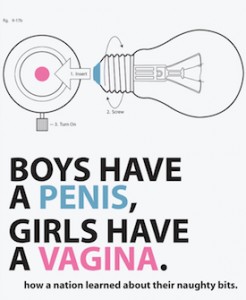
Graphic supposedly created for a 2004 special presentation by PBS and Oregon Public Broadcasting about the history of sex ed in public schools.

Graphic supposedly created for a 2004 special presentation by PBS and Oregon Public Broadcasting about the history of sex ed in public schools. Sadly, according to an OPB spokesperson reached by phone, no such program ever aired.

Like a rite of spring, it was time for the separate girls’ Reproductive Health class with Nurse Kathi.

Do you remember yours? Was it a nurse talking with you, maybe a gym teacher, or ‘the movie’ like it was for me in the ‘60s? Did you, or could you, say vagina or penis in class? Back then it was called Sex Ed, but we are more politically correct with our title now — if a child lives in a state that even allows a factual presentation about the changes of puberty.

I was lucky enough to be working in New Mexico, one of the 22 states in the U.S. that mandate sex education, at a K-8 school of primarily middle-class kids. As their school nurse, I was deemed by the Public Education Department as best suited to teach 4th through 8th graders about their body changes. I was especially grateful that this was NOT one of the three states that mandate only negative information about same-sex relationships. I could only imagine the feelings of anxiety, shame or isolation such a presentation could cause for any gay or lesbian students, or those with gay or lesbian parents.

Knowing that he had lost the students in this 5th grade class (one of three), the teacher instructed the boys to go to Mrs. K’s room across the hall and the girls to stay with me. One of the boys said jeeringly to a girl, “Have fun!” as he walked by me to exit; I couldn’t resist cheerily saying to him, “See you boys at 2:00.”

The smile fell off his face, as if he had forgotten that his boys-only class followed the girls’. Had he enjoyed embarrassing her about the thought of learning about her body, and then realized he was embarrassed as well?

I cherished my hour with this age group of girls. In 4th grade the girls watched a cartoon movie with me and I showed them how to put a sanitary pad on underwear, as some of them would need to know that at age 9, but that was about all they could handle. But by age 10 to 11, hormones can burst forth like daffodils in spring, and they are eager and ready for real information.

They want to understand why that boy is pushing them on the playground, or they feel a ‘zing’ with someone who, until then, had just been a friend. Hormones are powerful and at this age the attractions of puberty can come out ‘sideways’. They aren’t equipped to handle the feelings; they want to be close or touch someone, but are often misdirected in their attempts.

The students had been taught in previous life-skills classes that they were in control of their bodies, and with that personal responsibility they learned that yes means yes, and no means no. It was my role to reinforce the concept, especially now that they were older and could soon be in an increasing number of situations where they may not have a parent or adult readily available to intervene. These girls weren’t dating yet, but a parent might drive a group of them to the movie theater, and knowing some of these girls, I could be assured they would text a group of boys to meet them there.

We talked about what they could do when another person pushed them at recess. They had the ready answer of “Tell an adult,” like the yard-duty staff or their teacher, which was how these conflicts were usually handled in the school setting — focused on finding a resolution with the involved students. But, if they weren’t at school, how they could advocate for themselves by saying, “I don’t like you pushing me (or touching me) that way, and I want you to stop now”?

Being able to let someone else know what is not okay at that age could only grow into a great skill to have as an adult, and hopefully lead to healthy relationships. And what if that assertion was followed by a question such as “Why were you pushing me?” I can imagine a moment of introspection, followed by the honest answer of “Well, because I like you.” I may be a dreamer, but I was planting seeds of hope for a new generation in which transparency about feelings could be the norm.

We were just sitting and talking together, so when I pulled forward my flip chart to talk about their bodies and the changes of puberty, no one seemed overly concerned. But when I turned to the drawing with an internal view of ovaries, fallopian tubes, uterus and vagina to discuss the cycle of menstruation and used the word vagina, screams and laughter filled the room.

It wasn’t my first time teaching this class, so I just waited for it to subside. I pointed to my elbow and asked what body part that was, and they said, “elbow.” I pointed to my nose, and they said, “nose.” I pointed to the vagina on the picture, said “vagina,” and they lost it again.

Now I got to do my second favorite thing when teaching 5th grade girls’ reproductive health: to normalize the names of body parts related to the reproductive system and sexuality. I talked about growing up in America today and how in our culture the real names of our body parts related to sexuality are uncomfortable even for many adults to say. On top of that, each of them had family, cultural and perhaps religious values that could shape how they think about anything related to sex.

Just as a topic for pondering, I asked the students what it says about us as a society when we consider the number of euphemisms we have for male and female sexual anatomy.

This was recently demonstrated on The Daily Show when Jon Stewart was interviewing Dana Perino. She was talking about a picture of herself and her dog on the cover of a magazine.

This grown woman, a former White House press secretary accustomed to daily verbal parries with the most direct of reporters is also a current talk show host — therefore most likely familiar with the rules surrounding what words can and cannot be said on TV. Yet she was cringing as she tried to describe being questioned about her dog’s leg.

As Perino put it, the dog’s leg was “directly covering, you know what; the junk thing.”

When Stewart went on to clarify what she was referring to, her answer of “well, not that part, the other part,” was filled with as much trepidation. I really think she would have been just as uncomfortable had she not been on TV, and just talking with a friend.

In the classroom I explained that, for me, the reproductive system is no different from the respiratory or cardiac systems of the body, with organs that had names and functions. I reminded the girls that in addition to deciding what they would allow another person to do with them physically, no one could force them to say anything, either. I said that if they wanted to, there was something I’d like to try together that could help them.

I said, “Let’s all say the word vagina together until we can do it without giggling.” They agreed they could try, and we kept saying “vagina” together. At first the laughing was more uproarious than before, but by the 7th or 8th time, there were just giggles, and finally they could say it in a normal tone.

“Woohoo, you did it!” I praised them for trying that exercise. I’d posit that saying vagina without giggling is not only a step toward accepting our bodies, but necessary for learning to love our bodies — and ourselves.

The class continued and at the end I told them that if they had any more questions they could always talk with me in my office, or could talk with a parent or other trusted adult — that we are waiting for them to ask questions, because many times adults just don’t know how to bring up the subject of sexuality. I reminded them that talking with their friends is ok, too, but that their friends may not know any more than they do, and an adult might have better answers.

Of course, I wish I’d had more than only an hour with those girls, but I can find comfort in the knowledge that there are about 50 girls born in the year 2003 or so who can say the word ‘vagina’ without giggling. If only I could spend some time with Dana Perino so we could practice saying the word ‘penis.’

What about you? Have you had to work at saying ‘vagina’ or ‘penis’ without a giggle, without feeling awkward? Have you ever thought about why?

Personally, when I’m aware of a feeling or apprehension that does not seem situationally appropriate, it’s a signal to delve into my past to find the root cause. Generally, there has been a judgment or shaming that I have internalized that requires excavation. Brought to the surface, it can be examined and truth can shine its healing light. Given how taboo it is to speak of sex and genitalia with anything like relaxed candor, and how lacking the sex education is in most states, we might need backhoes to excavate the whole country.