Category Archives: Columnist

You Have A Meeting

The symbolic Sun is direct in tropical Gemini, moving as it always does — counter-clockwise on the zodiac. Emblematic Mercury is also in Gemini, but retrograde, moving clockwise on the zodiac. On Saturday, the Sun and Mercury will meet (or ‘conjoin’) in passing at 8+ Gemini. The Sun’s conjunction with Mercury will imply a meeting for you as well, between consciousness and intellect.  

len-wallick-logo

You might want to begin preparing for your meeting with an understanding of what’s going on in the actual sky, then translate the astronomical events to the astrological framework of the zodiac circle. The planet Mercury is presently moving between Earth and the Sun, about to pass Earth from the solar system’s inside lane.

The process of Mercury catching up and passing Earth as both orbit the Sun gives rise to the illusive perception that Mercury is moving backwards, or retrograde — shown in abstract as clockwise apparent motion on the zodiac.

Mercury retrogrades happen three times a year, for approximately three weeks each time. The approximate middle of each Mercury retrograde period is marked by what is called an interior (or more traditionally, ‘inferior’) conjunction. This is because Earth, Mercury and the Sun are all lined up with Mercury in the middle. That’s what will be happening Friday. 

Hence, the interior conjunction of the Sun with Mercury shortly before 12:56 pm EDT (16:55:46 UTC) Saturday will not be a rare event. Nonetheless, each Mercury retrograde and its midpoint are unique, based on the context in which they take place. As you can probably tell by the conditions of and events in your life and the world right now, the context implied by astrology is energetic and complex. Such conditions call for conscious awareness 

The Sun represents consciousness, among other things. It’s the sort of consciousness that is evident and interactive, giving rise to personality and revealing something of what’s going on inside you and everybody else. Because Mercury is always so close to the Sun — and therefore difficult to discern separately — it represents (among other things) something close to consciousness but still discernibly different: the intellect.

The intellect is self-aware, frequently analytical and capable of abstraction. At its worst, intellect can get in the way of consciousness and inhibit awareness. At its best, intellect can moderate the vagaries of personality, facilitating better communication, greater awareness, and deeper understanding between conscious beings.

Hence, your role going into Saturday’s meeting of the Sun and Mercury. It will not be enough for you merely to show up and pay attention this week. You will be called on to participate and make a difference by recognizing and enhancing the highest, best potential in any situation and acting to prevent worst-case scenarios.

To participate most effectively, take a clue from Mercury’s position relative to the Sun. From our perspective here on Earth, Mercury will be in front of the Sun, representing the intellect in front of consciousness. Therefore, as a first principle, endeavor to show yourself as a thinking person as Saturday approaches.

In the heat of any particular moment this week, when others ask you why something is as it is, ask yourself how it could be as it should be. Should you be confronted by conflicting energies, consider not reacting in kind and not taking sides. Instead, try applying your own personal energy to solutions, even if you must venture to do so alone. When you encounter complexities, try what seems to be the simplest solution first.

Also, please remember that Mercury’s apparent motion is much slower than usual right now. Therefore, when you have time, take it — to think deliberately. Make notes, lists and even diagrams to get your thoughts out of your head and on paper (or some other printed media).

Finally, apropos of retrograde motion in communicative Gemini — where Mercury rules — employ words with an “re” prefix. Review, research and revise (among other things) before relating not just what you are conscious of in yourself, but also that you are aware of consciousness in others.

You have a meeting to be part of on Saturday, but really it’s for the rest of this week. In the midst of some of the most challenging astrology of the year, the implication is clear. This meeting will not be something to fear. Neither do you need to anticipate things getting worse in any way, shape or form. Rather, this week will be a chance to distinguish yourself as Mercury would have you do, and shine like the Sun you are. Be a natural resource in the world. Keep thinking. That’s what you’re good at. 

Offered In Service

Len is available for astrology readings. You can contact him at lenwallick [at] gmail [dot] com.

Danielle Voirin’s Photo of the Day for 05.26.15

In Marseille, a student writes on the terrace of the MUCEM, a museum showcasing European and Mediterranean civilizations.

In Marseille, a student writes on the terrace of the MUCEM, a museum showcasing European and Mediterranean civilizations.

Paris-based photographer Danielle Voirin travels the world and documents her experiences in photographs. She takes street photography and photojournalism a shade beyond even art, to the level of mysticism. You may see more of her work on her website DanielleVoirin.com, or her alt website, DaniVoirin.com.

Danielle Voirin’s Photo of the Day for 05.25.15

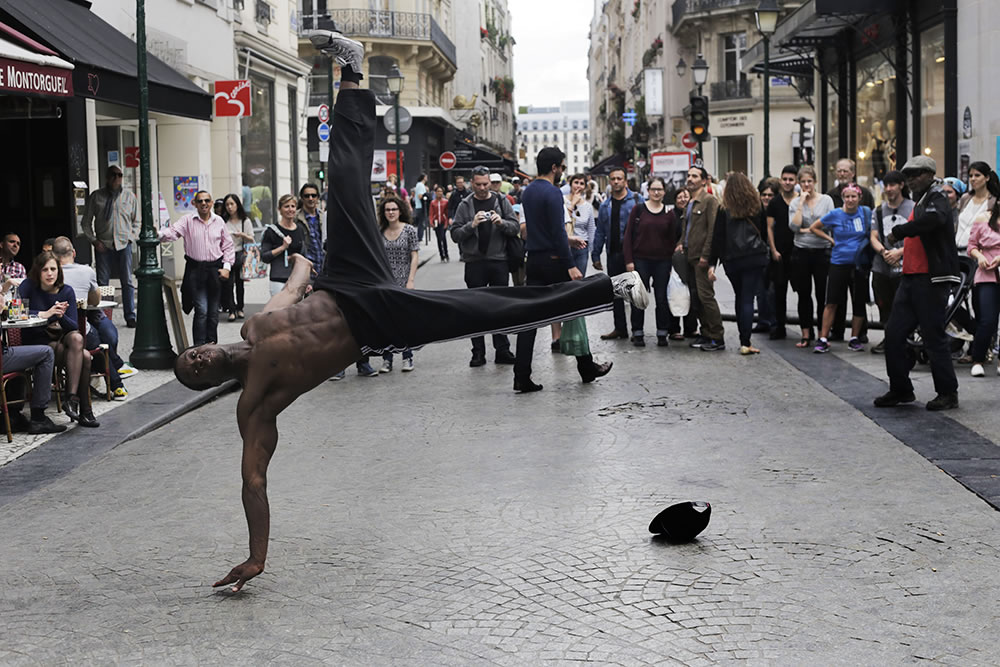
A group of hunky, gravity-defying break dancers have been entertaining rue Montorgeuil for the past several days in Paris.

A group of hunky, gravity-defying break dancers have been entertaining rue Montorgeuil for the past several days in Paris.

Paris-based photographer Danielle Voirin travels the world and documents her experiences in photographs. She takes street photography and photojournalism a shade beyond even art, to the level of mysticism. You may see more of her work on her website DanielleVoirin.com, or her alt website, DaniVoirin.com.

Empath as Crucible

By Amanda Moreno

So…there’s a lot going on these days, in the world and in people’s personal lives. How many times have I made that statement? Yet, it always seems to hit a deeper layer, and as the complexity merges with themes of letting go, life feels more and more surreal.

Photo by graywacke/A Landing a Day

Photo by graywacke/A Landing a Day

I’ve been quite stuck in my own process, but recent events have kicked me out of that a little bit. As the personal crises amp up for the people around me, the more my inner strength seems to grow.

For the first time in a long time, the sense of urgency I feel doesn’t feed my inertia and paralysis, but instead seems to be motivating and grounding. I’m also increasingly aware of the need for communities to form, at the same time as I find resistance within myself.

I’ve also been thinking a lot about what it means to be empathic, and I’m recognizing so many other empathic folks around me, and the ways we often struggle with being so attuned to the emotional energy of others. Perhaps that’s our normal or natural state of being as humans? It is all connected, after all.

I learned what the term “empath” means a few years ago, and several thousand light bulbs went off in my head. Yet some of what I read makes me cringe, be it out of recognition or disagreement. Once a concept is labeled and categorized, it seems to be pathologized, too. Or leaned on as a crutch. Or exploited.

My current working definition of the term is something like: An individual with an (often poorly understood) intuitive ability that allows them to feel the emotions of others. This can lead to the empath channeling the emotions themselves and internalizing them as their own. The empathic person is different from the empathetic person in that the latter is imagining what it is like to be in the other person’s shoes, whereas the empathic person is actually feeling the energy of the other person’s emotions — which can get pretty sticky, especially seeing as so much of it is unconscious. Empathic traits are also known as clairsentience.

The first time I recognized and got a conscious sense of my own empathic abilities in action, a friend I’d been intimately involved with for several years came over while in the middle of a personal crisis. There it was — the felt sense of all of his anxiety and grief and sadness careening towards me and into me. I flashed back to nights where he would call me at 2 am, in the middle of anxious insomniac attacks. He’d fall asleep shortly after I arrived, while I stayed up all night. Talk about co-dependency.

As he sat in my living room that day, essentially dumping his words and emotions, I realized what was happening. I then made the conscious decision not to take the emotions in, and erected a kind of barrier. I could still sense what he was feeling, but kept it separate from my own emotions, which were being triggered due to the heartbreaking nature of his story. He was going through something intense that mirrored some of my own experience, and I felt my own sadness arising.

Whereas previously my exchanges with this person would end with him feeling much more calm and relieved and me feeling anxious and wrecked, my boundaries gave me space to think objectively. I was able to give him a few recommendations for what he might be able to do to take care of himself, along with some hugs. It was a pretty big moment for me.

Another example: the first time I witnessed a ‘play’ scene, in the kinky sense, a woman was being spanked for an extended period of time. As she writhed, and the intensity grew, I was aware that I could feel the pain she was feeling. I remember thinking to myself, “No way. This is so fucking weird — but of course!” It didn’t feel like my ass was being hit by a hand or cane or flogger exactly, but I could feel the energetic rippling: first of her anxiety, and then her pain through warmth that seemed to radiate out from my ass and thighs, and then her euphoria as the endorphins set in. The scene ended with both of us quite high, although for better or worse I didn’t have the bruises to show for it. It was a huge eye-opener for me.

Since then, as I have become more aware of energetic boundaries, I have gone through several different phases of coping with what is, at times, a seemingly involuntary ability to take on or channel other people’s emotions. Last fall, I began to go through the pissed-off phase, angry at what felt like unwanted invasions. I began to recognize just how much it felt like things were hurtling at me all the time. I amped up all of my protective boundaries out of a longing to keep my field as clear as possible, as some really difficult stuff had gotten in.

I write that, and I become aware of a particular framework or worldview, which is where I’ve been getting stuck when trying to process or write about the dynamics of energy and identifying as an empath. Do I really want to live as if I have to protect myself from negative energies? Is it naive to think I don’t have to? Is the very act of protecting myself from something out there the same act that invites it in, or creates it in my field?

In an energy session the other day, my healer dude asked me to describe a feeling of tension I was having around my abdomen. I could see or sense what felt like clear space directly around my body, extending a bit outward, but then a darker or denser energy outside of that. It felt like it was encroaching. It didn’t feel evil or harmful, just different. He asked what it would be like to just let that energy flow through me.

I had some resistance at first; a feeling in my gut that was tight and clenched, unwilling to let go. But I trust this healer dude quite a bit, and decided to give it a try. Healer dude subscribes to a worldview in which even if there are ‘negative’ or ‘heavier’ energies hanging out in a person’s field, it is because they resonate with something within them. Therefore, working with the energies can reveal something about the person and what they are working on or through. Everything in its right place.

As I began to let the energy flow through, I noticed a relaxation. I noticed a flow. I noticed…presence. Not in the sense of an entity being there, but in that I felt…present.

The healer dude and I had a conversation after that about some various Buddhist techniques, all of them involving this kind of presence, particularly with more dense or ‘negative’ energies. He spoke of feeding them with love, transmuting them. It reminded me of the kind of work I do with spirit attachments or earth-bound spirits, in which getting them to the light is the ultimate goal, rather than exorcizing them or casting them out as fundamentally damned.

During the ‘anger’ phase of my empathic awakening, I struggled with feeling like some energies are parasitic. Like once they find the light within you, they feed and feed and feed. This experience is coming up against new worldviews I’m currently being exposed to, or old ones that are coming back to light. It should be interesting to see how it all shakes out.

There is also a masochistic dynamic I can recognize in the waltz of the empath. There is the potential for an ingrained belief that we become invaluable to people by merit of being able to take on all of their stuff, even if they’re not aware that’s what’s happening, and even if it hurts — by becoming the savior. That is a huge topic that I hope to cover in the very near future.

Bringing it back to the beginning, as I notice so many around me — myself included — embedded within some kind of crucible these days, I’m aware of two things. At the personal level, something is shifting in the way I meet other people’s crises, especially those I share physical intimacy with. I’m not hanging onto the emotions and locking them into my body, at least not as much as I used to. There is a difference between unconsciously taking it on, blocking it entirely, and allowing the energy in for a bit to alleviate some suffering.

At the collective level, I’m constantly compelled by an urgent sense that we need to be assisting and supporting the empathic among us. In light of the whole ‘it’s all connected’ thing, perhaps that’s just a call to help us all, and a more appropriate sentence would be: there’s a lot of feelings flying around out there — wouldn’t it be wonderful if we supported each other in developing those senses so they can be used for healing?

Take care, everyone. I’m very much looking forward to further explorations here.

Sleep Better & Have More Sex. Fight the Blue Light!

Note: If you’ve never poked around on Betty Dodson’s website, which she runs with business partner Carlin Ross, you’re in for a treat. As you might imagine, they cover the gamut of sex and sexuality topics, and Betty regularly answers reader letters in her blog posts. Eric Amaranth is her long-time protoge. — Amanda P.

By Eric Amaranth for DodsonandRoss.com

I’ve been wearing Gunnar glasses for over a year now to solve the eye strain problem caused by computer/laptop monitor light. They work very well. My wife wears them as well as some of her co-workers after she told them. A few months ago, something prompted me to do further research into how computer/laptop monitor light interferes with sleep.

Eric Amaranth

Eric Amaranth

What this has to do with sex is, the less sleep and also quality of sleep you have, the more your sex drive suffers plus other things like falling asleep in the middle of sex, which some people get mad at their partners for and take personally.

I saw that Gunnar glasses have a yellow tint and wondered why. I called them to ask and they said it was to act as a blue light filter to reduce the amount of blue light entering the eye which contributes to eye strain. I digged some more and found this program: F.lux

It’s freeware, virus-free. It gives the user the ability to lower their blue light output on computer monitors. I’ve been using it for a few months now and noticed that I was nodding off earlier in the evening than I was before and I was going to sleep faster when I did get to bed. It was also making the screen even less jarring to my eyes even with the glasses.

Some tips on how to use F.lux. Once it’s installed, go to your running programs box in the lower right (on windows) and click the yellow and grey yin-yang symbol. That’s the F.lux icon. Go to Settings and click the button to set your location so that the program will switch on at sunset. There is another button on the main menu with three horizontal lines. click that and it opens another options menu. Hover over “Lighting At Night” and you will see six or seven lighting levels. Three from the bottom up are active, the others above them are greyed-out. At the top of the list is a button to expand the colors. Click that. You’ll be promted to restart your computer. Do so. It won’t install a virus. Come back to that Lighting at Night option and you’ll find that you can activate any of the color options.

The default is “3400k Halogen”. You’ll see your screen go more yellow under that mode. I have mine set on “Candle” which brings the blue down even more. I find that works the best for me.

I did more poking around because I wanted the same filtering program for my iPhone because a cell’s full color screen puts out blue light. If you use your phone before bed like many of us do, you’ll undo all the setup time your f.lux program did. At this time, there isn’t a good app for a phone.

I found www.LowBlueLights.com. They make and sell thin vinyl transparent yellow filters that fit over the face of your smartphone and filter out the blue light. This website sells other blue light eliminating products like their custom orange glasses to be worn while watching TV or before bed wearing them around the house. There are many LED and white light producing bulbs that we use, but they aren’t good for us either. LowBlueLights.com also offers a yellow light bulb for your house. I suggest getting that or shop on a light bulbs-only website for smaller versions that will fit your lamp on your nightstand. The yellow lights in lamps at night have been doing even more to help my sleep.

I thought my mentor Betty [Dodson] would appreciate trying out F.lux. It was a big hit! She began to nod off at 12:30am the night she was watching movies on her computer. Normally, she’s up till 2:30 or 3am, she said. Not anymore. I was surprised at how quickly it worked for her. I went out to a light bulb shop here in NYC and bought some yellow blubs and installed them in a few lamps.

The reason all this works is because melatonin production by the pineal gland begins at night as part of our internal clock. If we’re up working or playing on a monitor or smartphone, (or have other white light producers in our home or business lighting, our brain takes in the blue light through the eye and is confused because blue light means daylight, but according to your clock it’s after sunset. Your brain tries to do two things at once: prepare you for sleep and wake you up.

The prep for sleep usually wins out, but like I indicated before, the sleep is not as deep and trouble getting to sleep often results. For people who drink too much caffeine (which is also a sex drive inhibitor for many women and some men) the blue light with that makes sleeping even more difficult.

I recently talked to a client who said she sleeps poorly and when she can’t get to sleep (after doing a ton of computer work prior to bed), she will stay up and get back on the computer to entertain herself. Feeding the problem even more.

I take it further actually and use candlelight as I’m getting ready for bed. It’s fun, old fashioned, and I feel the difference when I try to keep the blazing bright bathroom light on during the shower and toothbrushing vs the candle glow.

We have enough things making a hot sex life challenging. We don’t need the damn lights and gadgets sabotaging it too.


Eric Amaranth is a sex life coach covering topics ranging from solo and partnered women’s and men’s sexuality, first time orgasm for women, orgasm during intercourse, premature ejaculation, and much more. He is the ten year protege of pioneer sex coach, Betty Dodson, Ph.D.

In Honor

By Judith Gayle | Political Waves

Here we are again, a three-day weekend at hand, little flags waving in cemeteries country-wide to remind us why we get that extra day to sleep in. I’ve read a few articles recently calling Memorial Day a time to relax, usually accompanied by a humdinger of a recipe to break up the hamburger/hot dog monotony at that first picnic of the season. We’ll nod our heads along with a bit of martial music this weekend, salute the last few members of the Greatest Generation while secretly wondering if it really was, and gratefully take that extra day of rest, along with a slice of watermelon.

275+Judith_Gayle

Here in the Pea Patch, where the VFW still gathers the remaining vets from WWII and Vietnam to dress the graveyards, stores have filled an aisle or two with red-white-and-blue faux-bouquets to honor our beloved dead. Little plots of headstones — dotting the country landscape like convenience stores do urban neighborhoods — present a riot of color from flowers, real and silk. They’re hung with bird-feeders, alive with whirligigs and Mylar balloons, streamers dancing in the air. And so, once again, with eyes wide shut, we count the cost of our addiction to war without contemplating the cause.

As with many of our holidays, not everyone knows or cares why they’re being celebrated, which seems a grievous complaint against our educational system, not to mention our self-absorbed culture. Memorial Day, once known as Decoration Day, began as a day to honor the Civil War dead only three years after that war ended. It was deemed a federal holiday in Washington, D.C. in 1888 and declared a national holiday by Lyndon Baines Johnson in 1971. On this holiday each year, a wreath is laid at the tomb of the unknown soldier and a speech is given commemorating the sacrifice of those who gave their lives for their country, because — well — because freedom isn’t free, doncha know.

Let me be candid: I get really tired of hearing that catch-phrase, celebrated in country music, recruiting videos and anything starring Carlos “Chuck” Norris. Adults know that every choice exacts a cost of some kind, and SHOULD know that those who defend freedom don’t always wear a military uniform. Sometimes they stand up to tear gas and riot gear, sometimes they tell the truth even when the information is unwelcomed.

Some defenders of liberty even have to give their up their own freedom, spending time in prison or in Russia or in an obscure foreign embassy. As became clear early in this new century, one man’s patriot is another’s traitor, especially as the First Amendment becomes less relevant with each trade-off for national security. At this rate, it won’t be worth the velum it’s inscribed on by mid-century.

As a stark reminder of Dubby’s little venture into “spreading freedom,” the Patriot Act is back on our plates, for renewal or revision. I suspect many readers would rather we revise this rogue legislation, which has cost us reputation, treasure, privacy, Constitutional rights and the high road in ethical behavior, all in the name of safety. The bill is set to expire, with an improbable non-partisan mix of legislators questioning the validity of the sweeping surveillance it put in place under Bush and Company. McConnell has threatened to keep members from leaving town if they don’t pass some kind of extension before Friday evening as the legislation will expire by the time Congress retuns from break. As I write, the situation remains up in the air.

An attempt to remedy the worst of the Patriot Act, the USA Freedom Act was introduced to Congress late in 2013, as the nation became aware of the vast NSA surveillance. It included specifc limits on data collection. It was re-worked, backed by the Obama administration, and brought up again this year, with hopes that a bi-partisan vote would bring it to the floor for discussion. It has passed the House but seems to have little traction in the Senate. On this issue, interestingly, Boehner and McConnell are at odds. [UPDATE: The Freedom Act was voted down near midnight on Friday, putting the whole of the legislation in jeopardy. McConnell has scheduled another vote early on May 31 in an attempt to salvage it.]

Like a bout of PTSD, all that Patriot Act business has renewed our memories of ‘Shock ‘n Awe.’ And thanks to the fire and brimstone pushed by radical Islam in the Iraqi provinces — and an unexpected Bushism of the Jebby kind — the longest war in our history is being re-thought. When asked by a reporter whether, if he’d known then what he knows now, he would have gone to war with Saddam, Dubby’s little brother said, yeah, sure. This has brought BushWar II back to the forefront, and the Bush Family Business into focus. We used to think of Jeb as the smart Bush, the one Poppy burst into tears over when discussing the state of the nation. Little did we know. (I suspect we’ll have the same kind of vertigo next year around this time if we think of him as the moderate Republican candidate, by the way — he certainly is not!)

Almost immediately, Jeb began to back up, saying he misunderstood the question. It took several days and several different answers before he finally settled on, “No.” Jeb’s political DNA no doubt cowered at the possibility of insulting the troops, dissing his brother or annoying the base, especially when others like Cruz and Huck and Rubio have the evangelicals in their camp. It should come as no surprise — more like a dire warning with flashing lights and sirens — that both Paul Wolfowitz and Richard Perle, the neo-cons who carefully orchestrated Dub’s run-up to war (entirely responsible for Cheney’s insistence that we would be met with flowers in Baghdad), are now consultants to Jeb’s campaign (not to mention most of George’s other advisors. Again, NOT a moderate, just a bit more housebroken than the rest of the candidates on the right).

The war itself has now come under new scrutiny, not that the majority of Americans (left, right and center) don’t consider it a failed military experiment that, essentially, destabilized the Middle East. Jonathan Chait, hardly a tree-hugging minion, wrote a piece for New York Magazine titled “Was the Iraq War a Crime or a Mistake? Yes.” In it, he not only stapled the error of the Iraq misadventure to the page of epic failures in our history books, but warned that thinking of it as an intelligence failure rather than opportunistic adventurism is a slippery slope. Will Pitt used more candid terms when he described it as ” … a deliberate smash-and-grab robbery, writ large.”

Yes, Jeb’s baggage is hard to bear, and heavier by the day. Earlier in the week, a young lady corned Bubba and told him his brother was responsible for creating ISIS. Clearly, given that the hasty deBathification of Iraq let loose a group of tough combat veterans who would better have been charmed than insulted, she has a point. Add that the news from Iraq is grim.

While ISIS has its weaknesses (like the Pubs, neither interest nor ability to govern stands first and foremost), it now counts Ramadi — capital of the Anbar province — as the newest addition to its ‘caliphate,’ putting Baghdad in the cross-hairs. The Pentagon, State Department and Administration have downplayed the loss, calling it a temporary setback and insisting that Iraqi Security Forces (ISF) will take back the territory eventually, with our help of course. Yet it wasn’t that long ago that Mosul hit the skids in a similar fashion, falling into the radical’s hands. Its liberation is now considered out of the question.

In Iraq, the Achilles Heel within the ISF is the same as it’s always been: warfare in the Middle East is religious, dividing loyalties, and the political culture has only shape-shifted to the Western model on the surface. It has been, and is still, thick with corruption and tribal nepotism, religious bias simmering just under the skin. When the ISF cut and ran, leaving Ramadi to the conquerors, it was not the first time such an exodus had occurred. Had we understood that first sentence fully in 2003, the region might still be stable, the war might never have been fought and millions — including 4,000 dead Americans, with hundreds of thousands wounded and maimed — would have been spared the Bush Doctrine.

As it is, there is no good win in Iraq now that the genie is out of the bottle, and most of us know that — not even the military industrial complex, still busy making money hand over fist, is bothering to hide its cynicism. In the end, this is Iraq’s war to lose, with Iran picking up the pieces. It’s inevitable.

But what of America and her dependence on big oil, on corporate dominance, on militarism and resources not her own? What of America with her brash romance with drama and tragedy and horror, fighting an internal battle with the distancing techniques we’ve put in place to keep sorrow and outrage at bay? What of the children raised on violence and surrounded by gunplay? Is the cerebral cooling of the blood that we’ve embraced a way to diminish future war or simply to ignore its consequences?

When Ramadi fell, leading to the expected brutal purge of unbelievers and threat to historical treasures, Chairman of the Joint Chiefs, General Martin Dempsey, keeping a low profile, downplayed its loss as “not symbolic in any way.” This infuriated at least one mother, that of Marc Lee, a Navy Seal who died in Ramadi in 2006. She wrote an angry, impassioned letter to Dempsey, which read in part:

You, sir, owe an apology to the families whose loved ones’ blood was shed in Ramadi. Ramadi matters to us and is very symbolic to us. You need to apologize to our troops whose bodies were blown to pieces from IEDs and bullet holes leaving parts and pieces behind, Ramadi matters to them…

You and this administration have minimized that Ramadi could fall, now you are minimizing that it is falling, but you, Sir, WILL NOT minimize the sacrifice my son Marc Lee made or any of our brave warriors!

On Memorial Day, she — and others like her — will not just visit gravesites to deliver faux-flowers; they will march and growl and call for more blood in an effort to soothe their pain. Simple grief and contemplation are much too cerebral for such a day. The wounds are too fresh, the senses too raw among the warrior class. This is the same emotion that keeps the death penalty alive, the same outrage that finds no harm in killing ‘thugs’ in Ferguson. It’s our most primitive response: desire for vengeance.

While this mother has every right to throw her full support behind the “us or them” philosophy that got us all into this jam, perpetuating the attack/defend consciousness that simply MUST come to an end if we are to survive, I worry about how very intellectual all this has become in the chattering class. How cut and dried death is to those of us who witness, but do not fight. How easy it seems to fight a war now, not with boots on the ground, but with drones in the sky sent from a continent away.

This kind of cool analysis simply MUST NOT BE the energy signal of a new Aquarian Age, a technological disconnect from the shadow side of our grief, our anger, our pain. Water finds the path of least resistance, and so does human consciousness. We must not allow brutality and churlishness — cultural, political, military — to take us down this dark path when we have intent to lift ourselves up into the Light. There is too much at stake to devolve into a country intent on vengeance, looping endlessly in wars that have numbed our senses and turned our hearts cold.

On this Memorial Day, remember someone who fought for their country. Honor them, alive or dead. I am not ‘military minded,’ as it were, and I cannot but view the bright untested patriotism of the young who enlist, fight and die as expendable pawns for our geopolitical adventurism as tragic reality, but — like those who tithe to dishonest religious organizations, for instance — the dishonor is not theirs, but belongs squarely on the shoulders of those who use them so badly.

For many, the military is a stepping stone out of poor circumstances, a place to experience pride, camaraderie and discipline. If we have not taught them a higher octave of honor than nationalism, it is not their fault, it is ours. And so, for them — many of whom I know — I will honor those who serve. On the last day of this long weekend, then, I will fly the American flag in honor of the dreams of her children and their higher aspirations. I will fly the Stars and Bars in honor of what this nation can be, and I pray will be, one fine day to come.

Deep Roots

By Michael Mayes

I’m not the ‘enemy’ in the eyes of the police. I’m white, ‘middle class’. Hello white privilege. So, why have I always had a chip on my shoulder towards authority? I have never been arrested, and even got a couple ‘get out of jail free’ cards from cops back in the day. Yet my perception of authority has endured extreme polarization.

The author on his Outlaw dad's knee, on their infamous trip to visit Harry.

The author on his Outlaw dad’s knee, on their infamous trip to Florida to visit Grandpa Harry.

In a dream world, police would be perfectly trained, Freddy Gray incidents would not exist, and our cops would not be at war with certain citizens. I’m not a ‘criminal’, but I am the first male on my dad’s side in two generations (possibly three) to not be one.

My great grandpa was definitely a bootlegger at one point in his life, evidenced by him losing a scholarship to Cumberland College for bootlegging. Grandpa Harry did two years for robbing a savings & loan. My dad was in the Louisville Outlaws motorcycle gang; think motorcycles, guns and drugs. Dad told me recently that the trip to Florida to see grandpa Harry when I was three was actually because he was hiding from the cops.

I was born in 1981, but dad didn’t straighten his life out until about ’87, when I saw him on the news in a bright-orange jail suit. He got busted with a trunk full of guns coming back from Virginia. What really tops this all off is that my mom’s dad was a cop. He and I are not close; not because he was a cop, but because he wasn’t all that present in mom’s life.

Still, that’s a lot of recent ancestral baggage, which has called for some self-investigation while writing this piece. It gave me the advantage of seeing the issue from both sides. I know there are some bad cops, and generally I’ve used that knowledge to fuel my distaste for them over the years. However, I’m not an anarchist, I understand the need for authority. I’m now old enough and wise enough to know that to hate the police is not a fair or healthy outlook. We need the police. I’ve called on them more than a few times myself. They’ve never done me harm.

So, why does my blood boil when they abuse their authority? My ancestry. Also, I’m a pot-smoking artist/skateboarder who loves punk, reggae, hip-hop music — and, ultimately, police brutality is just plain wrong.

How do we stop it? Could better training stem excessive force? I decided to interview an officer from the Louisville Metro Police Department. He’s currently working at a high school where I was a substitute teacher, one of the ‘worst’ high schools in Louisville, where a great number of kids are considered ‘at-risk’.

To be clear, he is not a security guard for the school. He handles deeper issues with students who might be homeless, victims of abuse, or whose guardians are extremely bad influences. Before this job, he worked the beat during the graveyard shift in the West End and Portland neighborhoods in Louisville. Those are the areas with the most housing projects, and highest crime rates. The Portland neighborhood was my dad’s old stomping grounds. You can see the big skull & crossbones (engine pistons) on the face of the Louisville Outlaws clubhouse as you enter the West End coming down Market Street.

I sat down with Officer Bob*, in a glass-walled conference room next to the school’s main office. I was a little nervous because it was my first interview. I think he was a little confused as to what astrology had to do with police training when I told him Planet Waves was an astrology website. That’s what I get for calling it an “astrology website.” Lesson learned.

After asking about his work history with the force, I began by mentioning the Freddie Gray video, which had just been released one day prior. I asked if he had any opinion or insight as to why this kept on happening. He said he couldn’t speak for another officer, or officers’, actions. Fair enough.

I asked if de-escalation and risk-assessment were part of his training. He explained that, yes, he was given “scenarios” where he practiced using de-escalation, and risk-assessment techniques to avoid force. He added, “but there’s only so much they can teach you.” Knowing the neighborhoods where he patrolled for seven years, I believed him. Still, I wanted to know if there were any instances in his career when he felt like he would have benefited from better training. He said no, but he did think that better training would help.

After the interview, I felt a wee bit of healing in my ancestral rift with authority, but not much. I still felt fairly shitty about cops in general, convinced the officer I interviewed was a rare breed. The Freddie Gray video didn’t help. I had no idea what was coming, but I felt the wave building inside and all around me.

There are good cops out there, I knew that much. I needed to know there were a bunch of good cops grouped together. I needed to know that some police department, somewhere, knew how to train their officers. I burned to know that there was an alternative to the antagonistic, occupying forces that, by way of systemic and/or blatant racism, were making the lives of blacks all across this nation a living hell.

Also, I could not overlook the obvious racial element underlying much of this issue. I’ve been seeing this since Rodney King. I was admittedly scared when I saw the LA riots on the news as a boy, but that was before I could see behind the veil of the media. This issue is bigger than police training and brutality.

Still, I Googled “progressive police departments,” and came upon a jewel of an article in The Atlantic. In it, Seth Stoughton, an ex-cop turned scholar, pointed out that although American cops are among the best trained in the world, “what they’re trained to do is part of the problem … Officers aren’t just told about the risk they face. They are shown painfully vivid, heart-wrenching dash-cam footage of officers being beaten, disarmed, or gunned down after a moment of inattention or hesitation.”

It’s easy to imagine how that trains officers to shoot first, and ask questions later.

However, as the article points out, there is hope. Richmond, California’s, police department is getting results by way of better training. Stoughton writes, “Police agencies that have emphasized de-escalation over assertive policing, such as Richmond, California, have seen a substantial decrease in officer uses of force, including lethal force, without seeing an increase in officer fatalities (there is no such data on assaults).”

Obviously, it’s better to try to talk a person out of trouble than to provoke them into it. With at least one example for less enlightened police departments to follow, I had hope. Better training is a step in the right direction; but other police forces need to be aware it exists. And the citizens and officials of the communities they police need to vocally and actively push for this kind of change. Of course, there is no panacea: no amount of scenario training, no fail-proof de-escalation chart, no algorithm that can fix such systemic issues by itself. A complex web of factors contributes to the current state of police culture in the U.S.

As for my beef with authority, it’s been cut down to a digestible portion. As of completing the first draft of this piece (May 9), the Sun is a couple days past an exact conjunction with my midheaven, and will be exactly conjunct my natal Chiron in a matter of minutes. My wounded perception of authority is healing. Officer Bob, if you’re reading this, that’s how astrology relates to it all.

Responding to the issue of police brutality with some investigation forced me to be honest with myself. I can finally empathize with the police, even while the war rages on outside — but I’ll always stand firm against abuses of authority. Yet I can’t help but wonder, given my dad and grandpa’s run-ins with the police: if they weren’t white would I even be here?

*not his real name

Danielle Voirin’s Photo of the Day for 05.22.15

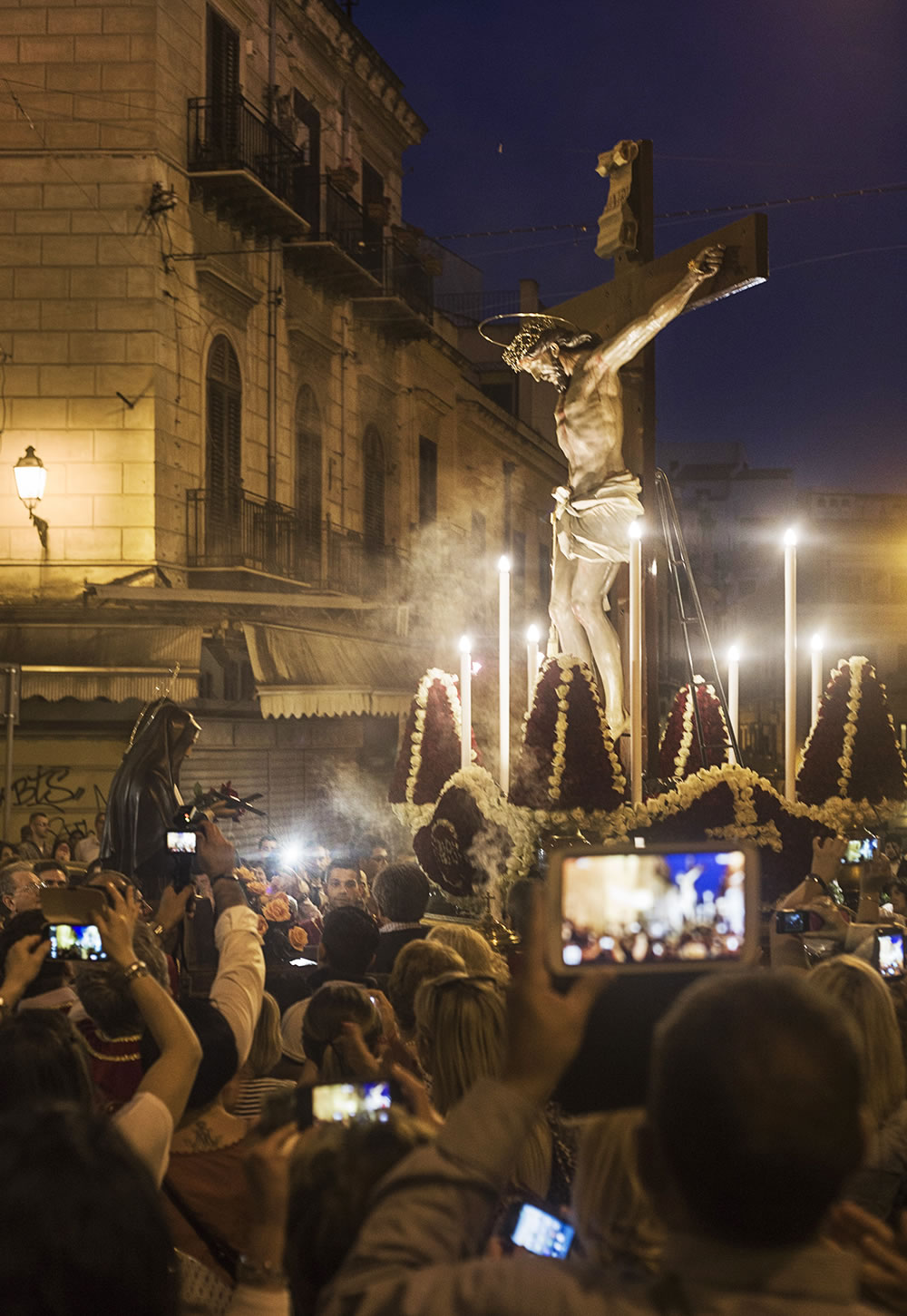
Today is the feast day of St. Rita, patroness of lost causes, who died on this day in 1457.  She was given special attention in Palermo, Sicily, last Sunday when a crucified Jesus, carried by chanting Sicilians, came to meet her at the church local's call Santa Rita’s, but on maps read as belonging to St. Augustine.  She was brought out to greet him three times, each one accompanied by chanting, and on the last round, a shower of roses.

Today is the feast day of St. Rita, patroness of lost causes, who died on this day in 1457. She was given special attention in Palermo, Sicily, last Sunday when a crucified Jesus, carried by chanting Sicilians, came to meet her at the church that locals call Santa Rita’s, but which on maps is said to belong to St. Augustine. She was brought out to greet him three times, each time accompanied by chanting, and on the last round, a shower of roses.

Paris-based photographer Danielle Voirin travels the world and documents her experiences in photographs. She takes street photography and photojournalism a shade beyond even art, to the level of mysticism. You may see more of her work on her website DanielleVoirin.com, or her alt website, DaniVoirin.com.